Cold Brew Coffee Basics: What It Is, Taste, Vs. Iced Coffee
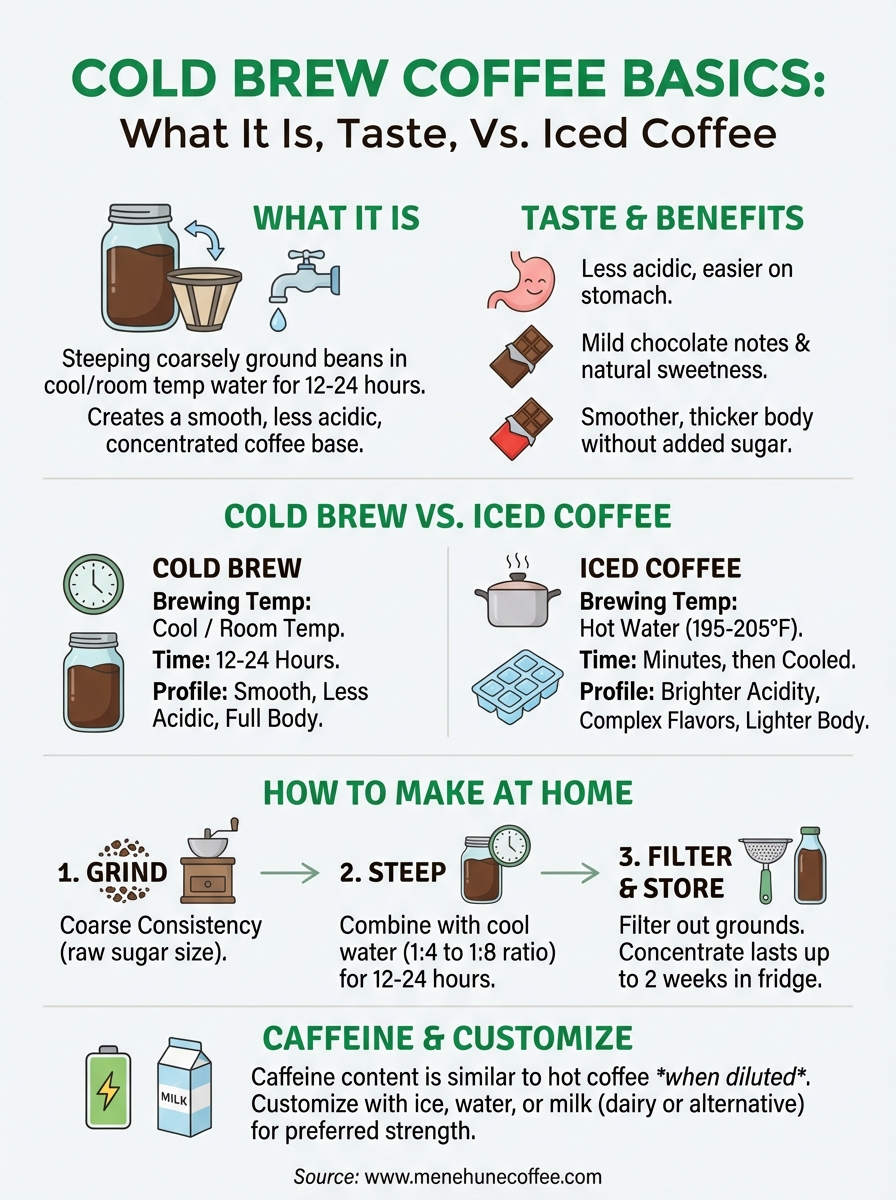
Cold brew coffee is coffee made by steeping coarsely ground beans in cool or room temperature water for 12 to 24 hours. This slow brewing method creates a smooth and less acidic drink compared to traditional hot brewing. You get a concentrated coffee that can be served cold over ice or diluted with water or milk to your preferred strength. The result is a mellow and naturally sweet beverage that has become a favorite for coffee drinkers seeking a refreshing alternative.
This guide breaks down everything you need to understand about cold brew. You’ll learn why it’s different from iced coffee, how to make it at home with simple equipment, what it tastes like, and how much caffeine it contains. We’ll also share tips to customize your cold brew to match your taste preferences. Whether you’re curious about trying it for the first time or looking to perfect your brewing technique, this article covers the essentials to help you enjoy cold brew coffee at its best.
Why cold brew coffee is worth knowing
Understanding what is cold brew coffee matters because this brewing method offers distinct advantages that traditional hot coffee cannot match. The cold steeping process extracts fewer acidic compounds from the beans, which makes cold brew easier on your stomach and gives it a naturally smooth taste. You can prepare large batches in advance and store them in your refrigerator for up to two weeks, which saves time during busy mornings. This convenience factor has made cold brew increasingly popular in both home kitchens and coffee shops across the country.
Health and flavor benefits you can enjoy
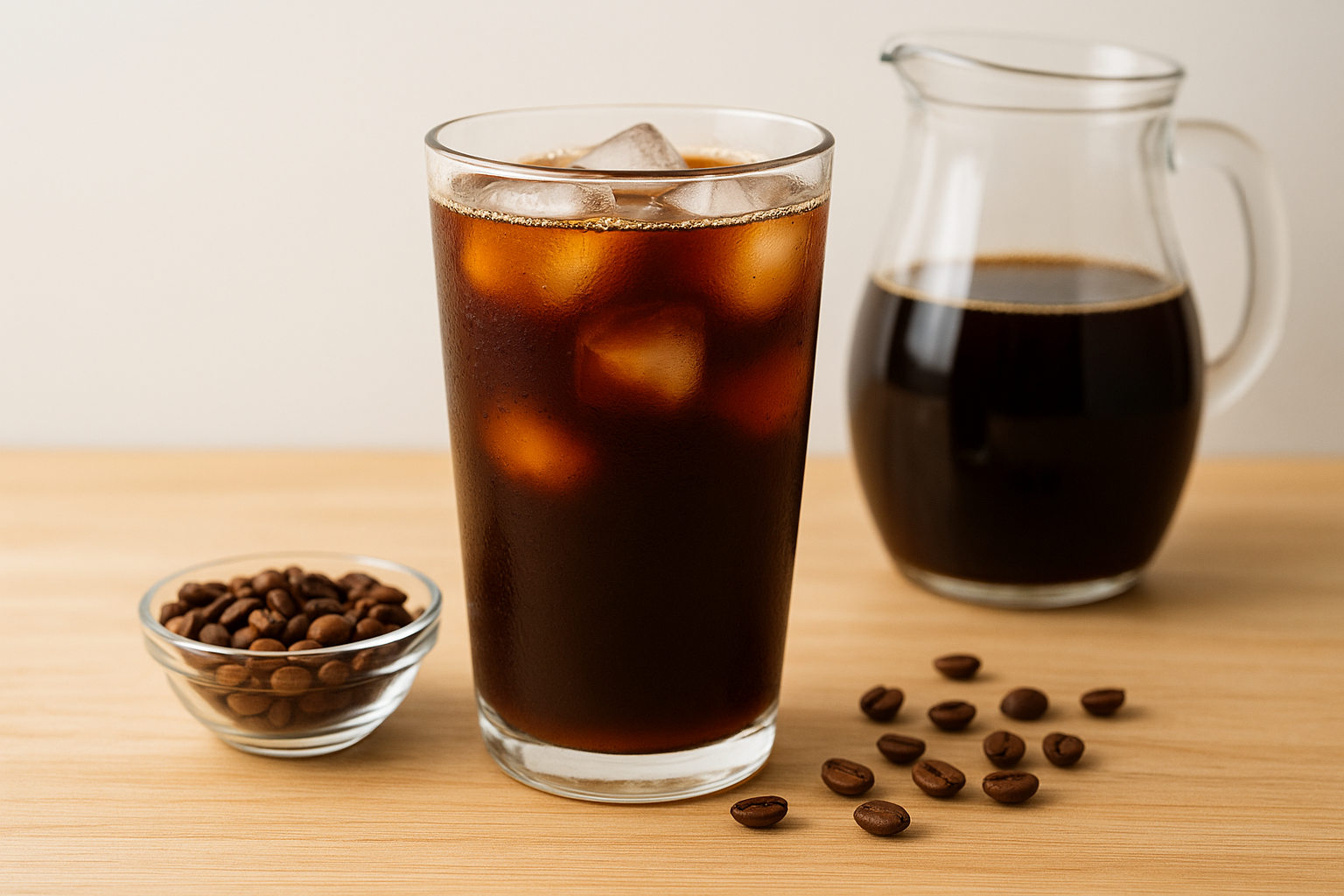
Cold brew delivers the same antioxidants and chlorogenic acids found in hot coffee while providing a gentler drinking experience. The lower acidity means you’re less likely to experience digestive discomfort or tooth enamel sensitivity that sometimes comes with regular coffee. You’ll notice milder chocolate notes and subtle sweetness without needing to add sugar, which helps if you’re watching your calorie intake. The smooth profile works well for people who typically find hot coffee too bitter or harsh.
Cold brew’s reduced acidity makes it a smart choice for anyone with a sensitive stomach who still wants to enjoy their daily coffee ritual.
How to make cold brew coffee at home
Making cold brew coffee at home requires minimal equipment and simple steps that anyone can master. You’ll spend most of the brewing time waiting rather than actively working, which makes this method ideal for preparing coffee while you sleep or go about your day. The process involves steeping coarsely ground beans in cool water, then filtering out the grounds to leave behind a smooth concentrate. Once you understand the basic technique, you can adjust the recipe to create your perfect cup.
Equipment you need to get started
You can brew cold brew with items already in your kitchen. A large container or jar serves as your brewing vessel, while a fine mesh strainer or coffee filter separates the grounds from the finished concentrate. Many coffee lovers use a French press because it combines the container and strainer in one tool. A kitchen scale helps you measure coffee and water accurately, and a grinder lets you start with fresh whole beans for better flavor.
Specialized cold brew makers simplify the process by including built-in filters and spouts for easy pouring. These devices range from simple manual brewers to electric machines with multiple features. Consider your budget and how often you’ll make cold brew before investing in dedicated equipment. Basic supplies work perfectly well for occasional batches, while frequent cold brew drinkers benefit from purpose-built makers that streamline preparation and cleanup.
Step-by-step brewing process
Start by grinding your coffee beans to a coarse consistency similar to raw sugar or coarse sea salt. Measure your grounds using a ratio between 1:4 and 1:8 coffee to water, depending on how strong you want your concentrate. Pour the grounds into your container, add cool or room temperature water, and stir gently to ensure all grounds make contact with water. Cover your container and let it sit for 12 to 18 hours at room temperature or in your refrigerator.
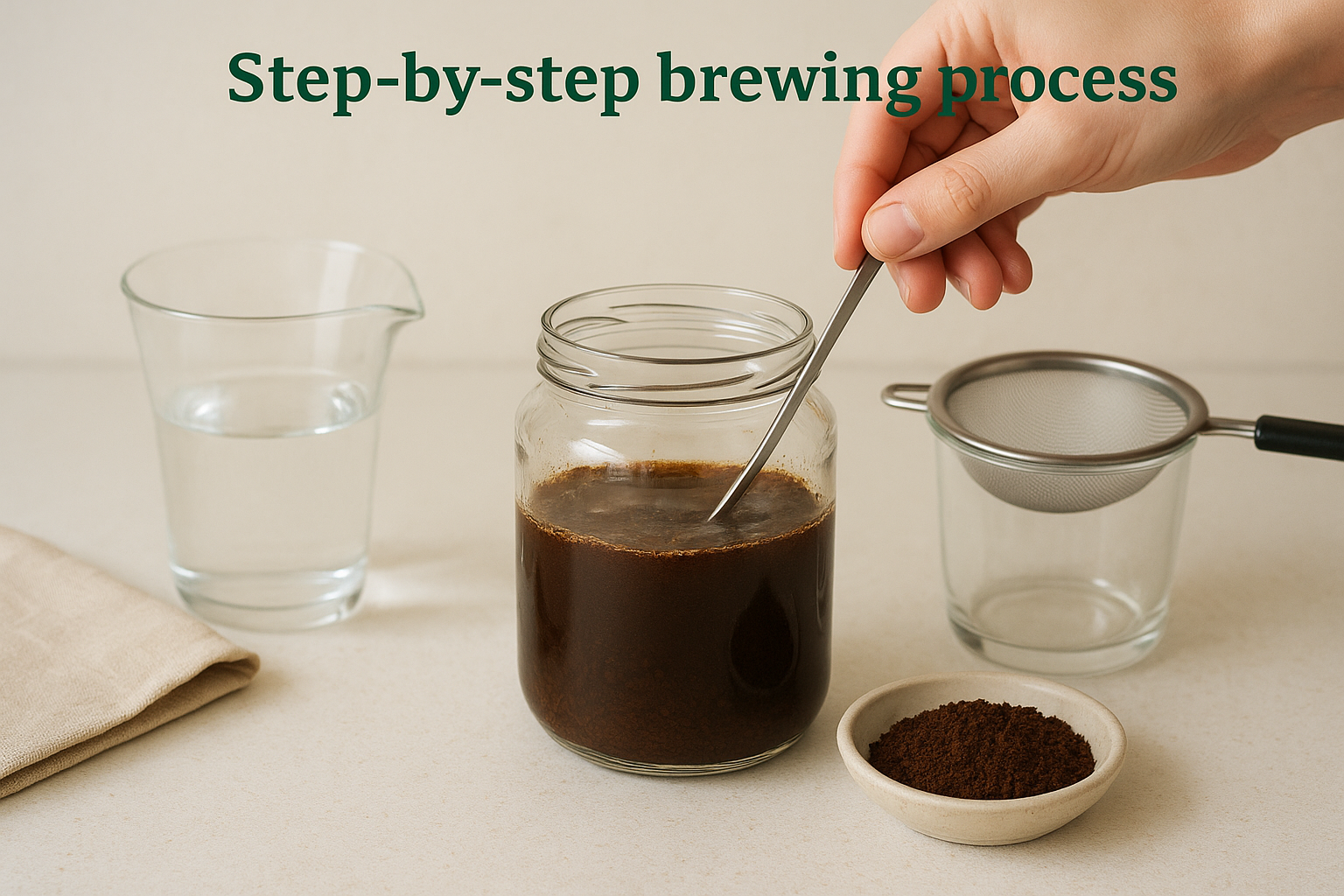
After steeping, you need to strain out the coffee grounds. Line your strainer with a paper filter or cheesecloth if you want a cleaner result, then pour the mixture through slowly. The liquid that collects is your cold brew concentrate. You might need to strain twice if you notice sediment in your final product. Store the strained concentrate in a sealed container in your refrigerator where it stays fresh for up to two weeks.
Getting your coffee-to-water ratio right
The ratio you choose determines whether you make ready-to-drink cold brew or a concentrate that needs dilution. A 1:5 ratio creates a strong concentrate that you’ll mix with equal parts water or milk before drinking. A 1:8 ratio produces a lighter concentrate that still needs dilution but uses less coffee overall. If you prefer understanding what is cold brew coffee through experimentation, start with a 1:6 ratio and adjust based on your taste preferences.
Testing different ratios helps you discover the strength that matches your personal coffee preferences without wasting beans.
Your final serving can include ice, water, milk, or alternative milk depending on how you enjoy it. Remember that adding ice dilutes the concentrate further, so account for this when mixing your drink.
Cold brew vs iced coffee key differences
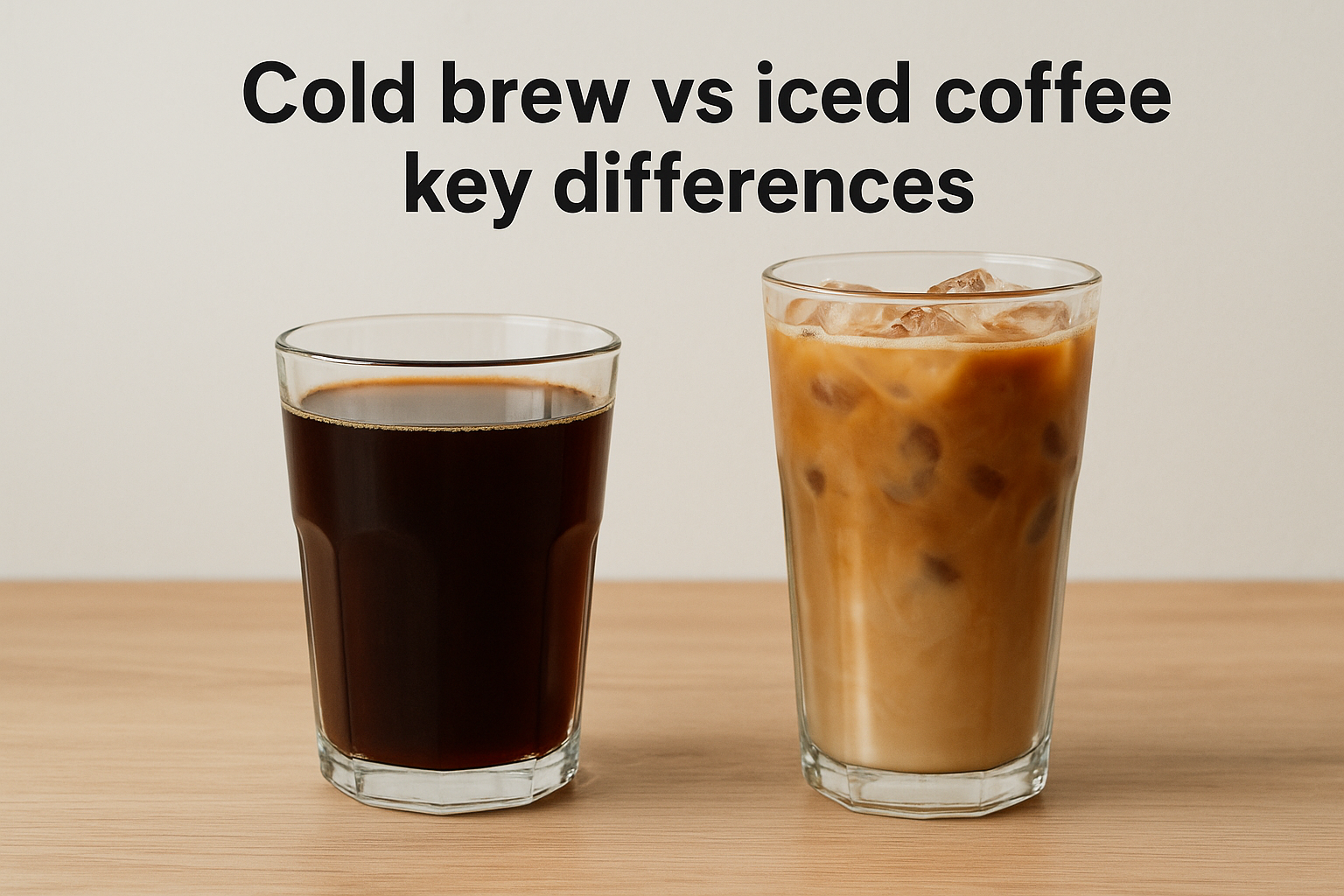
The main difference between cold brew and iced coffee comes down to brewing temperature and time. Cold brew uses cool or room temperature water steeped for 12 to 24 hours, while iced coffee starts as hot brewed coffee that gets cooled down and poured over ice. This fundamental contrast in preparation creates distinct experiences in taste, texture, and strength. Understanding what is cold brew coffee compared to iced coffee helps you choose the right drink for your preferences and make informed orders at coffee shops.
How each drink is made
Iced coffee follows the traditional hot brewing method using machines, pour-over devices, or French presses with water heated between 195°F and 205°F. Baristas brew the coffee hot in just minutes, then either cool it to room temperature or pour it directly over ice to chill it quickly. Some coffee shops use the “flash chill” technique where they brew with less water and pour the hot coffee onto ice immediately, which prevents dilution and preserves flavor better than standard icing methods.
Cold brew requires coarse grounds and patience rather than heat. You combine the grounds with cool water and let them steep for an extended period, extracting flavor slowly without the high temperatures. The result is a concentrate that you dilute before drinking. This process pulls different compounds from the beans compared to hot brewing, which explains why the same coffee tastes different when prepared as cold brew versus iced coffee.
Taste and texture differences you’ll notice
Cold brew delivers a smoother and less acidic profile with subtle chocolate notes and natural sweetness. The extended steeping time extracts fewer bitter compounds and oils, creating a mellow drink that many people enjoy without adding sugar or cream. You’ll find the body feels thicker and almost creamy on your palate compared to regular coffee.
Iced coffee maintains the brighter acidity and complex flavors characteristic of hot brewed coffee. You taste more of the beans’ origin notes, whether fruity, floral, or nutty, along with sharper acidity. The lighter body and crisper finish make it refreshing but potentially more bitter if the coffee cools too much or sits too long. Most people add milk, cream, or sweeteners to iced coffee more frequently than they do with cold brew.
The brewing method you choose determines whether you get cold brew’s smooth chocolate notes or iced coffee’s bright acidity and complex flavors.
What cold brew tastes like and caffeine facts
Cold brew coffee brings smooth chocolate flavors and natural sweetness to your cup without the sharp acidity you find in hot brewed coffee. The taste profile leans toward mild and mellow notes because the cold water extracts different compounds from the beans compared to hot water. You’ll experience a drink that feels fuller and creamier on your tongue, making it easy to enjoy without adding sugar or cream. Understanding what is cold brew coffee means recognizing how brewing temperature shapes the final flavor in your glass.
Flavor profile you can expect
The extended steeping time pulls out fewer bitter compounds and less of the acidic oils that create sourness in hot coffee. You taste prominent dark chocolate notes along with hints of caramel or nuts depending on the beans you use. Light and medium roasts develop subtle fruit undertones when cold brewed, while darker roasts produce deeper cocoa flavors. The mouthfeel comes across as thicker than regular iced coffee because the slow extraction creates more body in the liquid.
Cold brew maintains its freshness and flavor stability better than hot coffee after brewing. You won’t notice the stale or oxidized taste that develops when hot coffee sits too long or gets reheated. This stability makes cold brew ideal for meal prep and keeping ready-to-drink coffee in your refrigerator throughout the week.
Caffeine content explained
A typical serving of cold brew contains roughly the same caffeine as hot coffee when you dilute the concentrate properly. The concentrate itself packs significantly more caffeine than an equal amount of hot coffee because it uses more grounds per ounce of water. You control the final caffeine level by adjusting how much water or milk you add to your concentrate before drinking.
Your cold brew’s caffeine content depends entirely on your dilution ratio, giving you control over how strong each serving becomes.
Tips to customize and serve your cold brew
Your cold brew concentrate gives you complete control over strength, sweetness, and temperature for every serving you pour. The concentrated form works as a versatile base that adapts to different preferences throughout the day. You can transform it into an energizing morning drink, a refreshing afternoon beverage, or a dessert-style treat depending on what you add. Understanding what is cold brew coffee means recognizing this flexibility that sets it apart from regular coffee brewing methods.
Dilution and mixing ratios to try
Start by mixing your concentrate with equal parts water or milk to reach a balanced strength similar to regular coffee. You can adjust this ratio based on whether you want a stronger or lighter drink. Ice dilutes your beverage as it melts, so pour concentrate over ice cubes first, then add less liquid than you normally would. Alternative milks like oat, almond, or coconut work exceptionally well with cold brew’s chocolate notes, creating creamy drinks without dairy.

Try these popular combinations: add a splash of vanilla extract and honey for sweetness, blend with protein powder for a morning shake, or mix with tonic water and citrus for a refreshing coffee soda. Your concentrate also makes hot coffee when you dilute it with warm water or steam milk, giving you a smooth cup without brewing fresh.
Serving temperature and storage tips
Cold brew tastes best when served between 35°F and 40°F, which is standard refrigerator temperature. Pour it over large ice cubes that melt slowly to prevent excessive dilution. You can freeze leftover concentrate in ice cube trays to chill future servings without watering them down.
Freezing cold brew into ice cubes gives you a smart way to keep drinks cold and strong throughout the day.
Store your concentrate in an airtight glass container in the refrigerator where it maintains quality for up to two weeks.
Final thoughts
You now understand what is cold brew coffee means and how this brewing method creates a smooth and refreshing drink through simple steeping techniques. The process gives you control over strength, flavor, and caffeine levels while requiring minimal equipment and effort. You can prepare batches in advance, experiment with different beans and ratios, and customize each serving to match your taste preferences throughout the week.
Starting your cold brew journey becomes easier when you work with quality coffee beans that bring out the best flavors in this brewing style. Discover how authentic Hawaiian Kona coffee transforms your cold brew experience with its naturally smooth profile and rich taste that complements the cold brewing process perfectly.