Cold Brew Coffee vs Iced Coffee: What’s the Real Difference?
You might think cold brew coffee and iced coffee are the same thing. They’re both cold. They both wake you up on hot days. But the difference between cold brew coffee vs iced coffee comes down to how they’re made, and that changes everything about taste, acidity, and caffeine content. Iced coffee is regular coffee brewed hot and cooled down. Cold brew steeps coffee grounds in cold water for 12 to 24 hours. That’s it. Simple as that.
This article breaks down the real differences between these two popular drinks. You’ll learn why brewing temperature matters, how each method affects flavor and caffeine, and which one works best for your Kona coffee beans. We’ll also show you when to pick cold brew and when iced coffee makes more sense. By the end, you’ll know exactly which method suits your taste and how to get the most from Hawaiian Kona coffee either way.
Why heat changes the chemistry of your cup
Heat doesn’t just speed up your brewing process. It fundamentally changes which compounds get extracted from your coffee grounds and how fast that extraction happens. When you brew coffee with hot water, you pull out oils, acids, and bitter compounds at a rapid pace. Cold water takes longer but extracts different molecules in different amounts. This is the core reason why cold brew coffee vs iced coffee tastes so different even when you use the same beans.
The extraction temperature effect
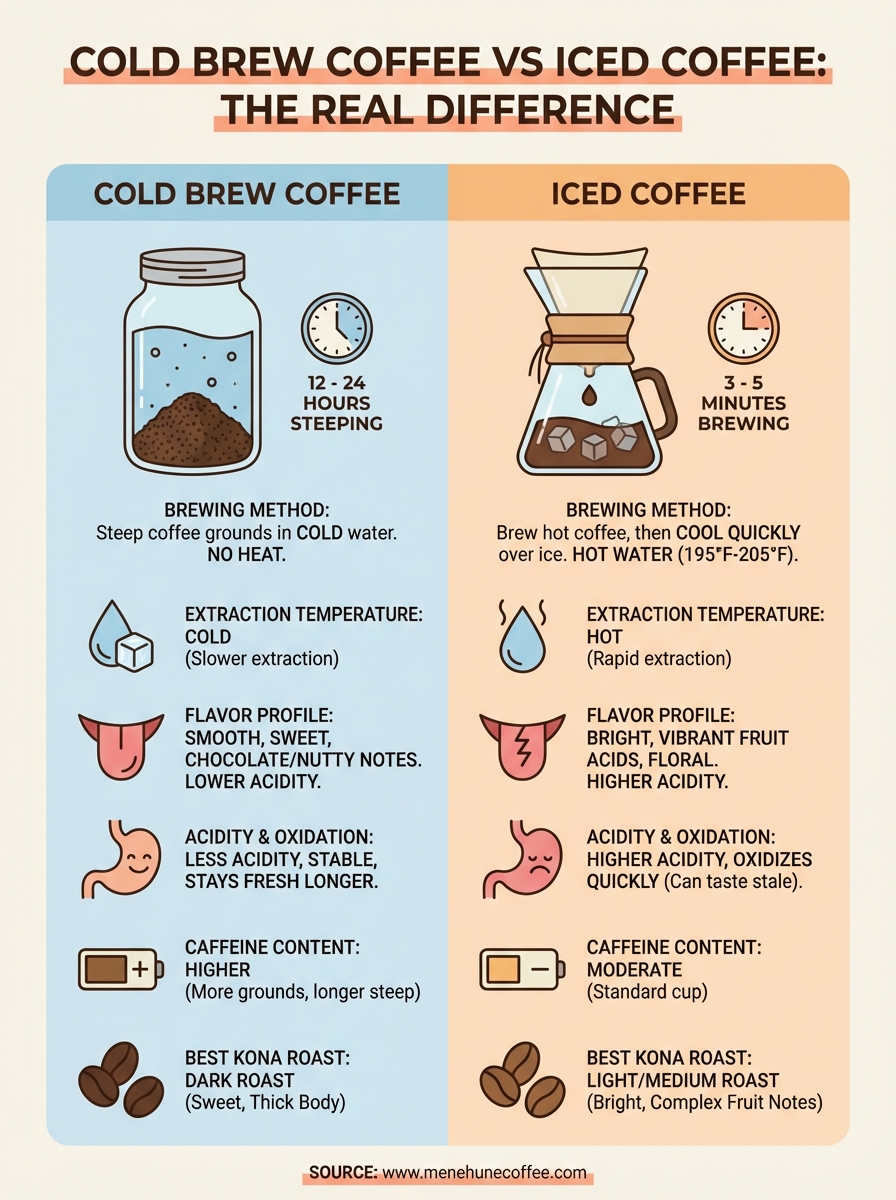
Hot water extracts more than 70% of coffee’s compounds within the first few minutes of brewing. You get bright acids, intense aromatics, and those bitter notes that come from tannins and chlorogenic acids. Cold water works slower and skips many of these heat-sensitive compounds entirely. Your cold brew ends up with less acidity because the cold temperature doesn’t break down certain organic acids as effectively. The result is a smoother drink with lower perceived bitterness.
Cold water extraction pulls sweetness and chocolate notes while leaving behind many of the sharp acids that hot brewing releases.
Acidity and oxidation differences
Your hot-brewed coffee starts oxidizing the moment it cools down. Those delicate flavor compounds break down when exposed to air and temperature changes. That’s why iced coffee can taste stale or flat if it sits too long after brewing. Cold brew avoids this problem because it never goes through the oxidation shock of cooling from hot to cold. The compounds stay stable throughout the entire process, giving you a drink that tastes fresh for days in your fridge instead of hours on your counter.
How to distinguish the brewing processes
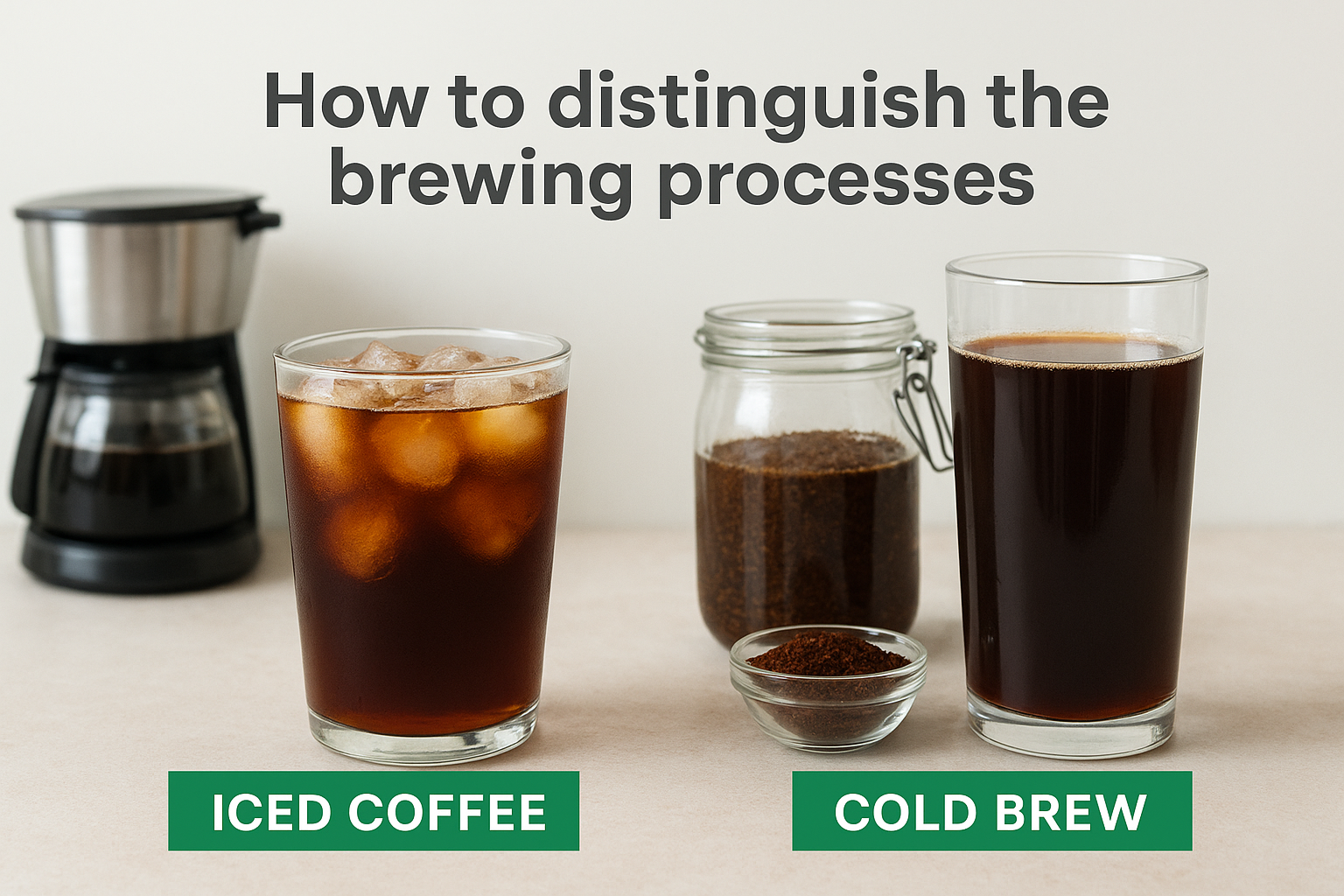
The main difference in cold brew coffee vs iced coffee comes down to one simple factor: when the coffee meets cold. Iced coffee starts hot and gets cooled down. Cold brew never touches hot water at all. Understanding these two methods helps you predict what you’ll taste and how much effort you’ll need to put in.
The iced coffee method
You brew iced coffee just like your regular morning cup. Use hot water between 195°F and 205°F and let it drip through your grounds in a standard coffee maker, pour-over, or French press. The entire process takes 3 to 5 minutes. After brewing, you pour the hot coffee over ice to cool it quickly. Some people brew it double-strength to account for ice dilution. This method gives you coffee fast but requires immediate cooling to prevent that stale taste from developing.
The cold brew process
Cold brew demands patience and time instead of heat. You mix coarse coffee grounds with cold or room-temperature water at a ratio of roughly 1:4 or 1:5. The mixture steeps for 12 to 24 hours in your refrigerator or on your counter. After steeping, you strain out the grounds using a fine-mesh filter or cheesecloth. What remains is a concentrated coffee that you dilute with water, milk, or ice before drinking.
Comparing flavor profiles and caffeine levels
The real test of cold brew coffee vs iced coffee comes when you take that first sip. Cold brew tastes smooth and sweet with chocolate or nutty notes. You won’t find the bright acidity or sharp bite that iced coffee delivers. Iced coffee keeps those vibrant fruit acids and floral aromatics from hot brewing. It tastes closer to your regular hot coffee but served cold. The difference hits you immediately.
Flavor differences you can taste
Your cold brew pulls natural sugars and oils from the beans without extracting bitter compounds that need heat to release. This creates a mellow cup with low acidity and a thick body. Iced coffee brings brighter flavors forward. You taste the same acidic snap and complexity you’d get from hot coffee. Those high notes that cold brew misses completely shine through in iced coffee.
Cold brew emphasizes smooth chocolate notes while iced coffee preserves the sharp acidity and bright fruit flavors from hot extraction.
The caffeine content comparison
Cold brew packs more caffeine per ounce because you use more grounds and steep them longer. A typical cold brew concentrate contains 200 to 300 mg of caffeine per serving before dilution. Iced coffee matches your regular cup at around 95 to 165 mg depending on brew strength. The extended steeping time in cold brew extracts more caffeine even without heat.
How to choose the right Kona roast for your brew
Your roast selection matters more than you might think when comparing cold brew coffee vs iced coffee. Each brewing method pulls different compounds from the beans, and roast level determines which flavors dominate. Light roasts preserve delicate fruit acids and floral notes that shine in iced coffee but can taste thin in cold brew. Dark roasts bring forward chocolate and caramel flavors that cold brew extracts beautifully while taming the bitter edge that hot brewing can emphasize.
Light roasts work best for iced coffee
Your light and medium roasts deliver bright acidity and complex fruit notes that iced coffee preserves through hot extraction. These roasts contain more origin-specific flavors from the Kona region, like citrus and floral characteristics. When you brew them hot and cool them down, those delicate acids stay intact and create a refreshing drink with layers of flavor.
Dark roasts excel in cold brew
Cold brew loves dark roasts because the extended steeping time pulls sweet chocolate and nutty flavors without the bitterness that hot water extracts. Your dark roasted Kona beans bring out smooth caramel notes and a thick body that feels almost creamy. The cold water skips past harsh tannins and focuses on the sugars that caramelized during the longer roasting process.
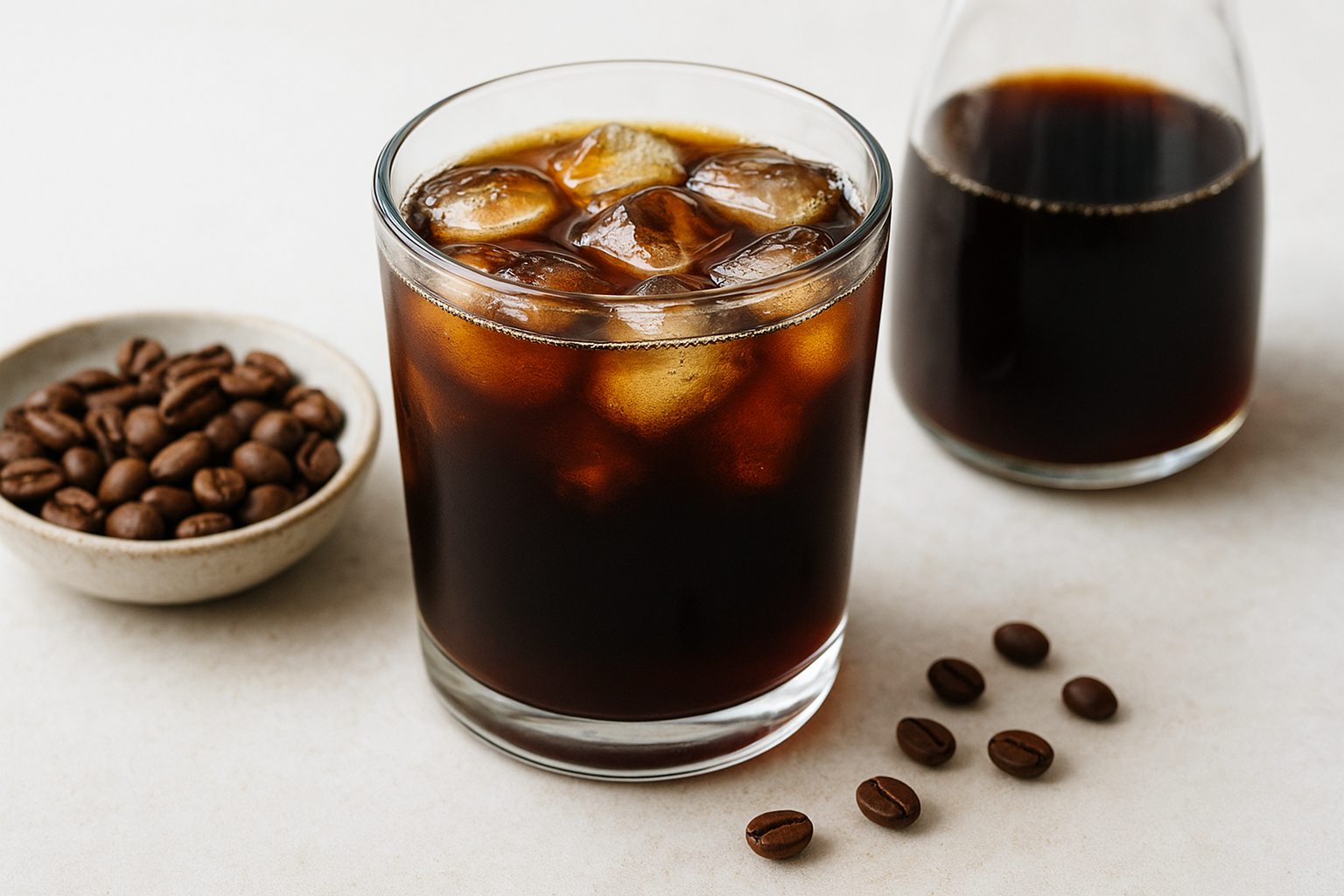
Dark roasted Kona coffee in cold brew creates a naturally sweet concentrate that needs minimal sugar or cream.
When to choose cold brew over iced coffee
Your choice between cold brew coffee vs iced coffee depends on your schedule, taste preferences, and how your body handles acidity. Cold brew wins when you want smooth flavor without brightness or when you need to prepare coffee ahead of time. Iced coffee makes more sense when you want quick preparation and prefer that sharp, vibrant taste that hot brewing delivers.
When you need convenience over speed
Cold brew takes 12 to 24 hours to steep, but you make it in large batches that last all week. You prepare one batch on Sunday and pour yourself a cup every morning without touching your coffee maker. The concentrate stays fresh in your refrigerator for up to two weeks. Iced coffee requires fresh brewing each time you want a glass, which means more cleanup and active preparation time.
Cold brew’s long shelf life makes it the practical choice for busy mornings when you need grab-and-go coffee.
When your stomach prefers low acidity
Your digestive system might handle cold brew better than iced coffee because the lower acid content causes less irritation. Studies show cold brew contains up to 67% less acid than hot-brewed coffee. People with acid reflux or sensitive stomachs report fewer issues after switching to cold brew.
Enjoying the best of both worlds
You don’t have to pick one side in the cold brew coffee vs iced coffee debate. Keep both methods in your rotation and match them to your mood and schedule. Make cold brew concentrate on weekends for smooth morning drinks throughout the week. Brew iced coffee fresh when you want bright acidity and complex flavors on demand. Your taste preferences and daily routine determine which method serves you best each day.
The quality of your beans matters more than brewing method. Premium Kona coffee delivers exceptional flavor whether you steep it cold or brew it hot. Different roast levels shine in different preparations, so experiment with both methods using the same beans to discover your preferences. Some mornings call for the bold brightness of iced coffee, while other days demand the mellow sweetness of cold brew.
Ready to taste the difference? Explore our selection of 100% Kona coffee and find the perfect roast for both brewing styles.