How to Make Cold Brew Coffee at Home: No Special Equipment
You crave that smooth, rich taste of cold brew, but the thought of buying expensive equipment or complicated brewing systems holds you back. Coffee shops charge a premium for what seems like a simple drink, and most guides make learning how to make cold brew coffee at home feel more complicated than it needs to be. You just want a straightforward method that delivers cafe quality results without the hassle.
Here’s the truth. You can make exceptional cold brew using items you already have in your kitchen. No fancy machines, no expensive filters, just basic supplies and a little patience. The process takes minutes to set up, steeps overnight, and gives you smooth, low acid coffee that puts commercial brands to shame.
This guide walks you through every step, from choosing the right beans and grind size to nailing the perfect coffee to water ratio. You’ll learn how long to steep, the best way to strain, and how to store your concentrate for maximum freshness. By tomorrow morning, you’ll be pouring your first glass of homemade cold brew.
What is cold brew and what you need
Cold brew stands apart from regular coffee because it uses time instead of heat to extract flavor. When you steep coarsely ground coffee in cold or room temperature water for 12 to 24 hours, you create a concentrated liquid that tastes smooth, naturally sweet, and far less acidic than hot brewed coffee. This method pulls out different flavor compounds than hot water does, which explains why cold brew never tastes bitter or sour even when you use the same beans.
The difference between cold brew and iced coffee
Iced coffee is simply regular hot coffee poured over ice, which dilutes it and often creates a watery, bitter drink. Cold brew uses an entirely different extraction process that happens slowly at low temperatures. The result gives you a coffee concentrate you can dilute to your preferred strength, mix with milk, or serve straight over ice without losing flavor intensity.
Cold brew concentrate stays fresh in your refrigerator for up to two weeks, making it perfect for busy mornings.
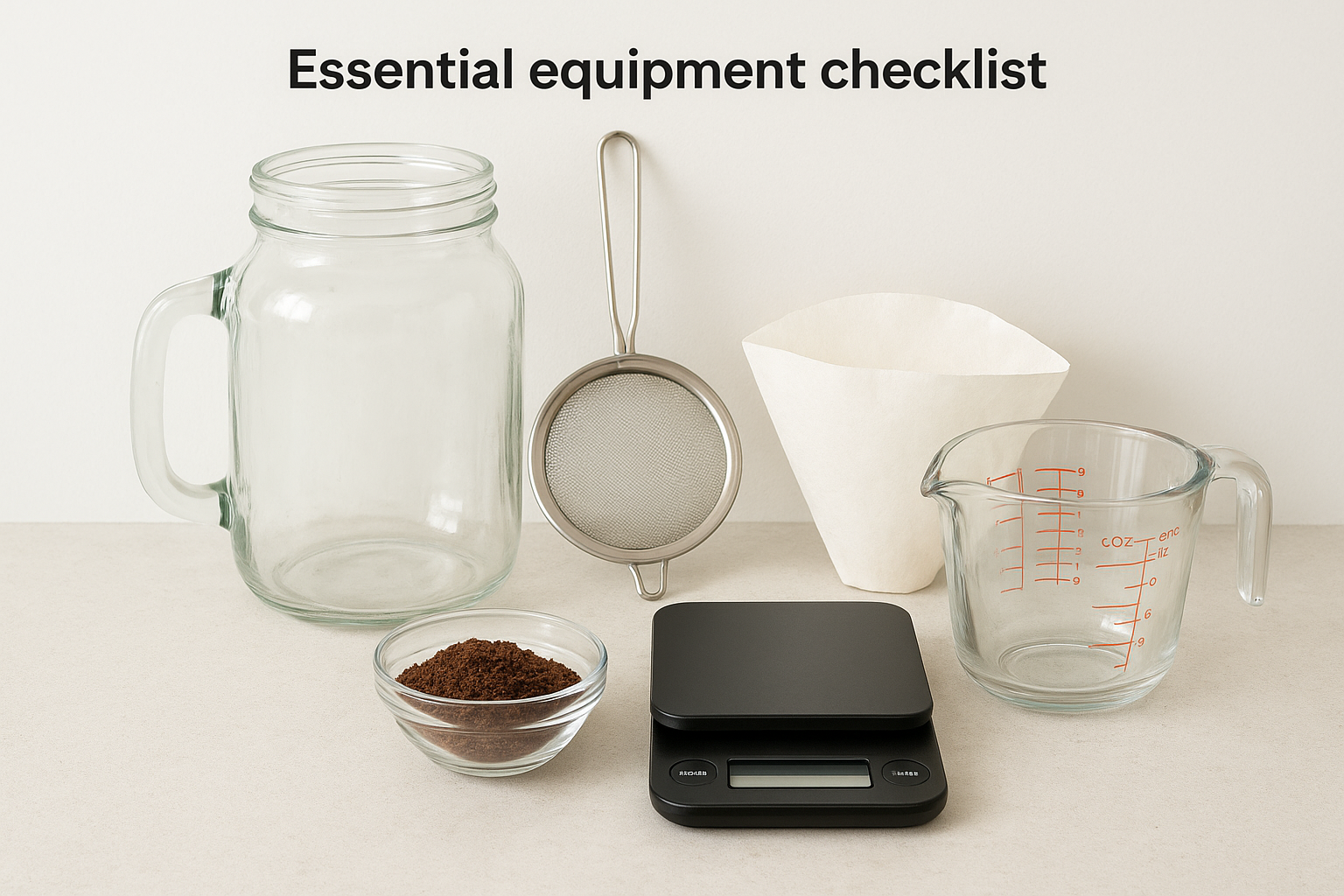
Essential equipment checklist
You already own everything needed for learning how to make cold brew coffee at home. Start with a large jar or pitcher that holds at least 32 ounces of liquid. Add a fine mesh strainer, cheesecloth or coffee filter, and a separate container for storing your finished concentrate. Your kitchen scale helps measure precisely, though measuring cups work fine too. That’s it. No expensive brewers, no specialized equipment, just basic tools you use every day.
Step 1. Choose your coffee and grind size
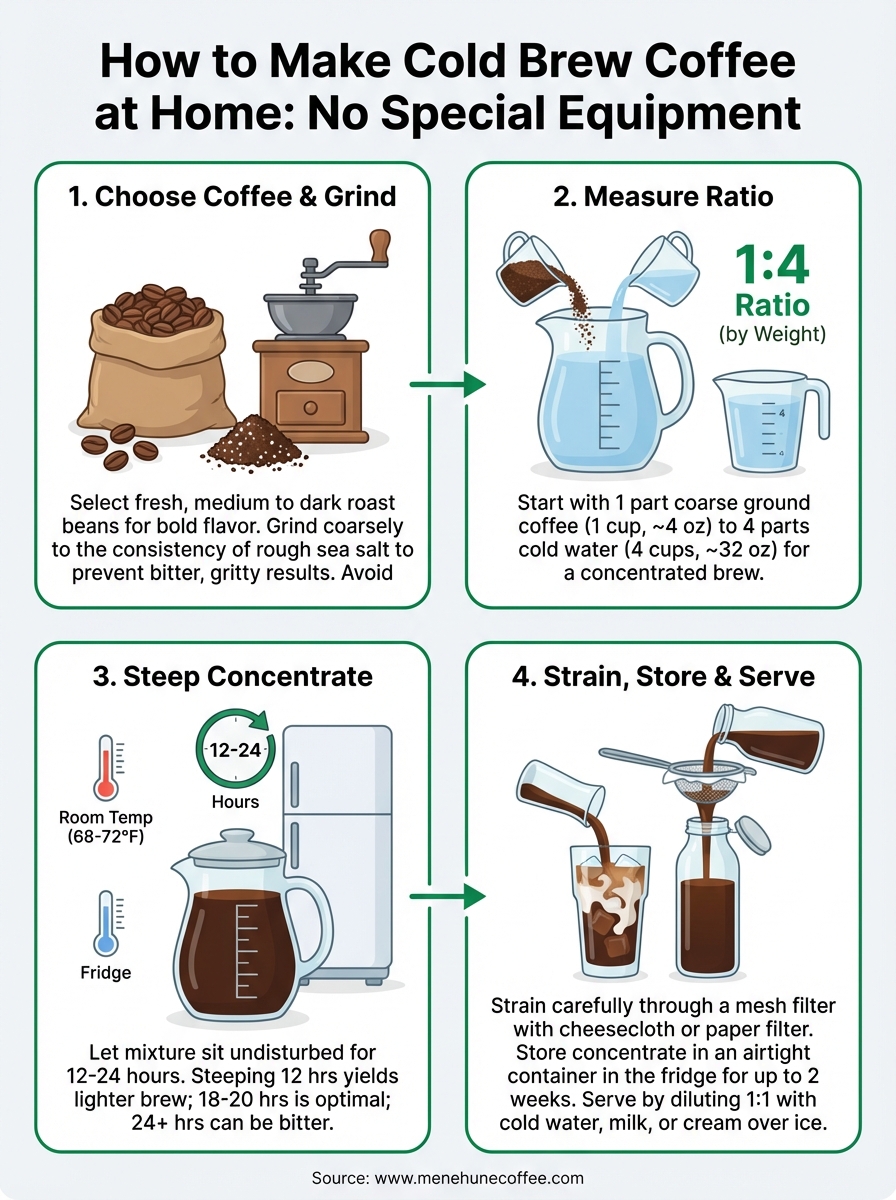
The foundation of great cold brew starts with selecting the right coffee beans and grinding them to the proper consistency. When learning how to make cold brew coffee at home, this first step determines whether your concentrate tastes smooth and balanced or weak and disappointing. You need beans that deliver rich flavor during long extraction times, and a grind size that allows water to flow through without creating muddy sediment.
Selecting your coffee beans
Medium to dark roast coffee works best for cold brew because these beans handle extended steeping times without developing off flavors. Light roasts can taste thin or overly acidic when cold brewed, while darker roasts give you that bold, chocolatey profile most people associate with quality cold brew. Fresh beans matter more than brand names, so look for coffee roasted within the past month. Single origin beans from Colombia, Brazil, or Ethiopia deliver excellent results, though blends work just as well.
Fresh coffee beans roasted within 30 days produce significantly better cold brew than older beans, regardless of price point.
Getting the grind right
Coarse grinding is essential for cold brew success. Your coffee grounds should look like rough sea salt or coarse breadcrumbs, not fine powder. Grind too fine and you’ll extract bitter compounds while creating a gritty concentrate that’s nearly impossible to filter cleanly. Most burr grinders have a French press setting that produces the ideal coarseness. If you buy pre-ground coffee or grind at the store, ask for a coarse French press grind. This larger particle size allows water to extract flavor slowly over 12 to 24 hours without over-extraction.
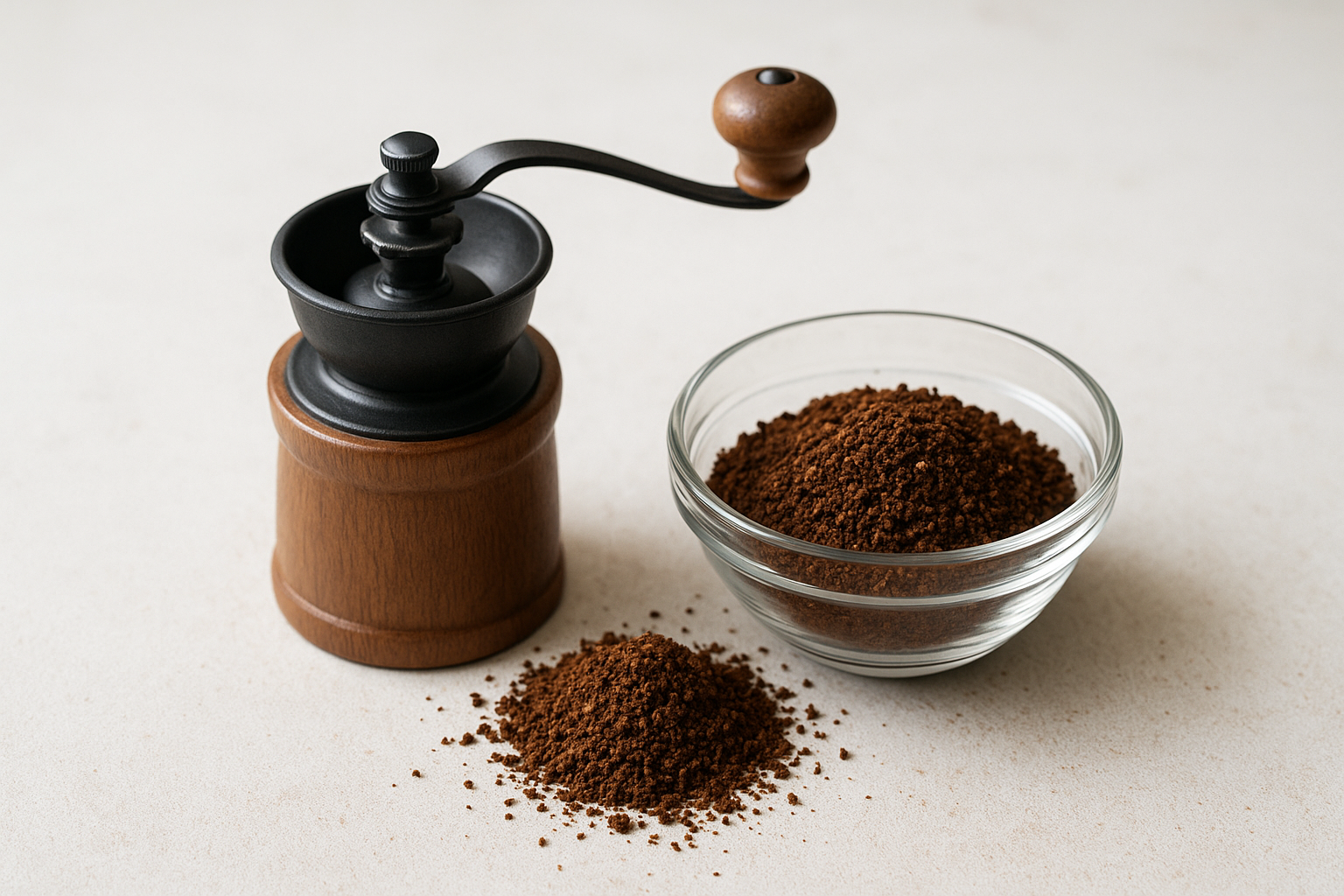
Measure out your beans before grinding. You’ll need roughly 1 cup of whole beans (about 4 ounces by weight) for a standard batch. Grind just before you’re ready to brew, as ground coffee loses freshness within hours of grinding.
Step 2. Measure your coffee to water ratio
Getting the ratio right makes the difference between weak, disappointing coffee and a concentrate that delivers exceptional flavor. When learning how to make cold brew coffee at home, you want a ratio that creates a strong concentrate you can dilute later. This approach gives you control over every cup’s final strength, whether you prefer bold black coffee or a lighter dairy based drink.
The baseline ratio
Start with a 1:4 coffee to water ratio by weight. This means you’ll use 1 cup of coarsely ground coffee (approximately 4 ounces or 113 grams) mixed with 4 cups of cold water (32 ounces or 907 grams). This creates a concentrated cold brew that you’ll dilute with equal parts water or milk when serving.
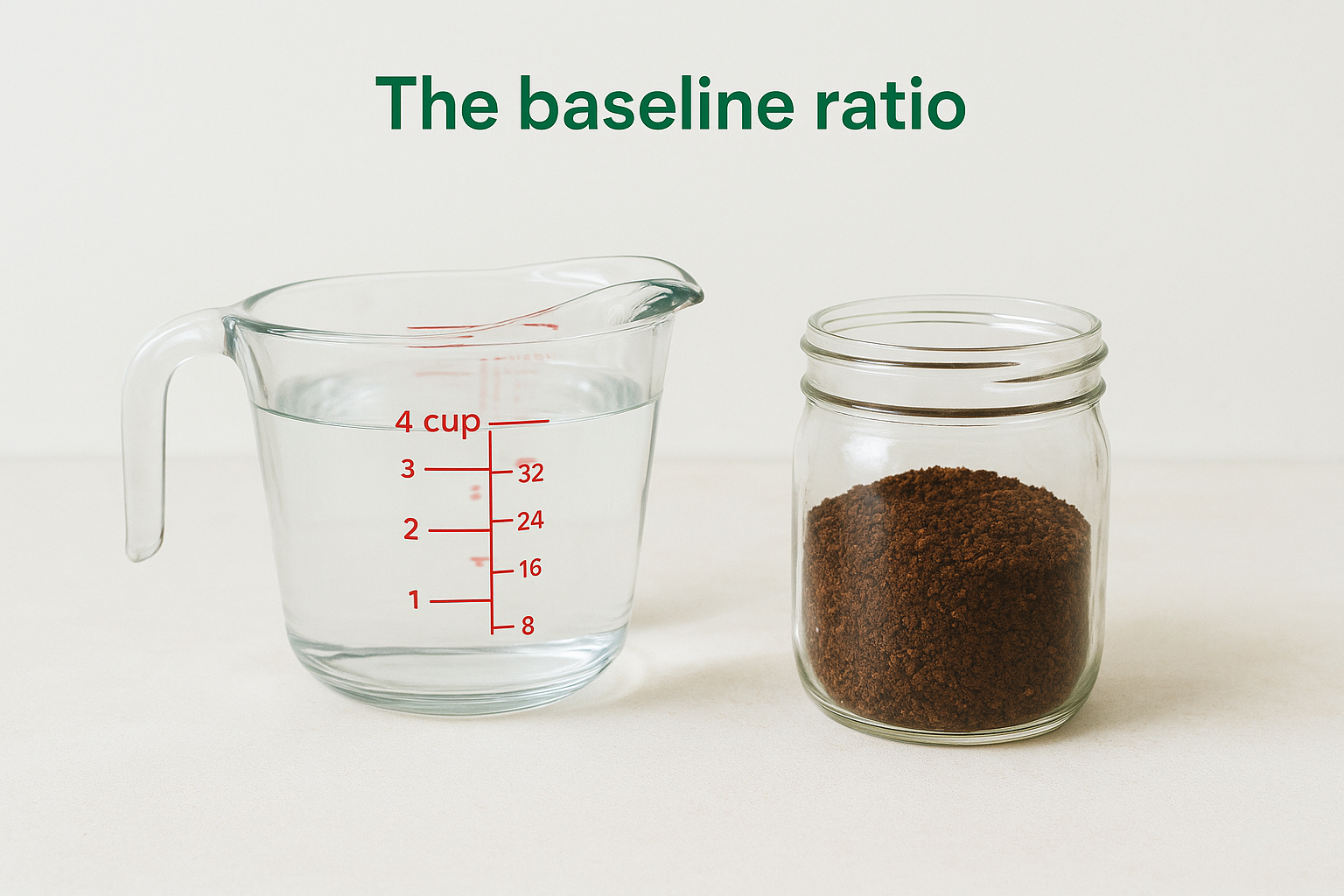
| Ingredient | Volume | Weight |
|---|---|---|
| Ground coffee | 1 cup | 4 oz (113g) |
| Cold water | 4 cups | 32 oz (907g) |
| Final yield | Approximately 3.5 cups concentrate |
A 1:4 ratio produces concentrate strong enough to dilute 1:1 while maintaining rich flavor, effectively doubling your yield.
Adjusting for personal preference
Your taste preferences determine whether you stick with standard ratios or experiment with adjustments. If you prefer milder cold brew, use a 1:5 or 1:6 ratio by adding more water to the same amount of coffee. For an even stronger concentrate, try a 1:3 ratio, though this creates extremely bold coffee that requires more dilution. Scale your batch size while maintaining the ratio. Double the recipe using 2 cups of coffee and 8 cups of water, or cut it in half for smaller batches.
Step 3. Steep your cold brew concentrate
Once you combine your coffee and water, the extraction process begins. You need to let the mixture sit undisturbed for the right amount of time in the proper location. This steeping phase is where patience pays off, as the cold water slowly pulls flavors, oils, and caffeine from the grounds. When learning how to make cold brew coffee at home, rushing this step ruins everything.
Choosing your steeping location
Your cold brew can steep at room temperature or in the refrigerator, and both methods work perfectly. Room temperature steeping (68-72°F) extracts flavor slightly faster and produces a bolder, more robust concentrate. Refrigerator steeping takes a bit longer but creates a smoother, mellower flavor profile. Pick the location based on your schedule and taste preference. Cover your container with a lid or plate to keep out dust and odors, then set it aside where it won’t be disturbed.
Timing your steep correctly
Steep your coffee for 12 to 24 hours depending on your desired strength. A 12 hour steep produces a lighter, more delicate concentrate that works well for mixing with milk or sweeteners. An 18 to 20 hour steep hits the sweet spot for most people, delivering balanced flavor without bitterness. Pushing past 24 hours starts extracting harsh compounds that taste unpleasant.
Steeping longer than 24 hours doesn’t make your cold brew stronger; it makes it bitter and over-extracted.
Set a timer so you don’t forget about your brew. The grounds will settle to the bottom after a few hours, which is completely normal. Resist the urge to stir or agitate the mixture during steeping, as this can create muddy flavors.
Step 4. Strain, store, and serve your coffee
After your coffee finishes steeping, you need to separate the liquid from the grounds completely. This filtering step removes all sediment and creates a clean, smooth concentrate ready for storage and drinking. When learning how to make cold brew coffee at home, proper straining makes the difference between professional quality coffee and a gritty, unpleasant drink.
Filtering your concentrate
Place a fine mesh strainer over a large bowl or pitcher, then line it with cheesecloth, a coffee filter, or a clean flour sack towel. Pour your cold brew slowly through the lined strainer, allowing gravity to do the work. The grounds will catch in the cloth while the liquid flows through. Gather the edges of your cloth and gently squeeze to extract the last drops of concentrate, but avoid pressing too hard or you’ll push fine particles through.
Straining twice through fresh filters produces crystal clear cold brew that stays sediment free for weeks.
Some grounds may pass through on the first strain. If you notice cloudiness or sediment, filter the concentrate a second time through fresh cheesecloth or a paper filter for perfectly clear results.
Storing and serving guidelines
Transfer your strained concentrate into a clean glass jar or bottle with a tight fitting lid. Store it in the refrigerator where it stays fresh for up to two weeks. To serve, fill a glass with ice and add equal parts concentrate and cold water (1:1 ratio). You can also mix it with milk, cream, or plant based alternatives instead of water.
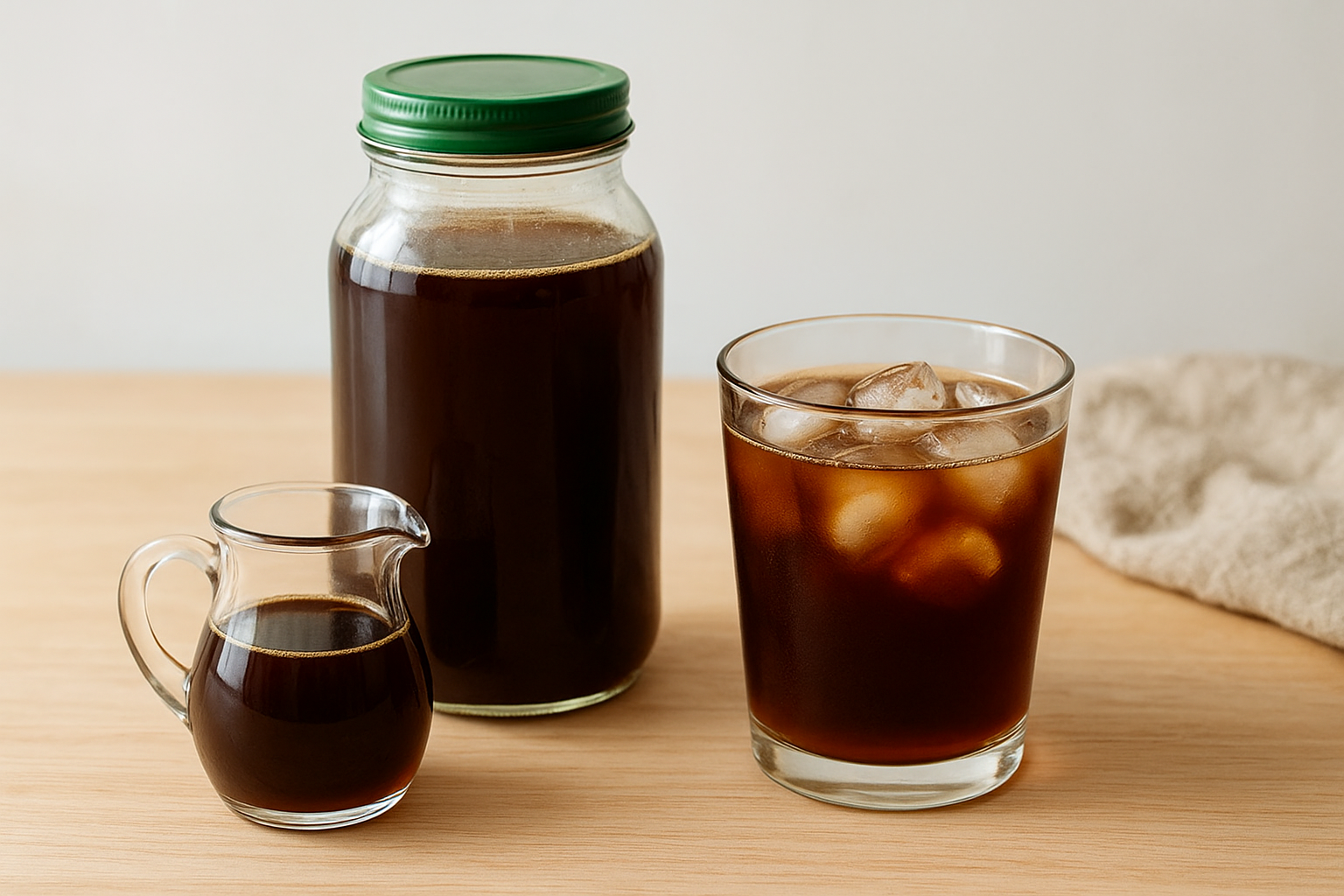
Adjust the dilution ratio based on your taste. Some people prefer a 2:1 water to concentrate ratio for milder coffee, while others drink it at 1:1 for maximum strength. Heat your diluted cold brew in the microwave for 30 to 45 seconds if you want hot coffee without brewing a fresh pot.
Cold brew tips, flavor ideas, and FAQs
Mastering the basics gets you great cold brew, but understanding advanced techniques and troubleshooting takes your coffee to the next level. These tips address common problems and open up creative flavor possibilities you can explore once you’re comfortable with the standard process.
Common mistakes to avoid
Your cold brew tastes weak when you use pre-ground coffee that’s too coarse or when you don’t steep long enough. Check your grind size first, as grounds larger than coarse sea salt extract poorly. Bitter, harsh flavors happen when you steep beyond 24 hours or grind too fine, which over-extracts unpleasant compounds. Cloudy concentrate usually means you rushed the straining process or used a filter with holes too large.
The single biggest mistake when learning how to make cold brew coffee at home is using old, stale coffee beans that have lost their essential oils.
Flavor variations you can try
Add whole spices directly to your grounds before steeping for unique flavor profiles. Cinnamon sticks, cardamom pods, or vanilla beans infuse naturally during the extraction process. Drop in citrus peels (orange, lemon, or grapefruit) for bright, aromatic notes. Chocolate lovers can add cacao nibs to create mocha cold brew without syrups.
Quick answers to common questions
Can you heat cold brew? Yes, dilute your concentrate and microwave it for 30 to 45 seconds for hot coffee that tastes smoother than regular drip.
How much caffeine does it contain? Cold brew typically has 200 to 300mg per 16 ounce serving when diluted properly, roughly double the caffeine of hot coffee.
Should you use filtered water? Tap water works fine, but filtered water produces cleaner tasting concentrate because it removes chlorine and mineral flavors that interfere with coffee notes.
Bring the cafe home
You now know everything about how to make cold brew coffee at home without spending money on expensive equipment or complicated systems. The process takes just minutes to set up, steeps while you sleep, and delivers smooth, cafe quality coffee every single morning. Your kitchen becomes your personal coffee bar when you follow these straightforward techniques, and you’ll never need to overpay for watery, bitter cold brew again.
The beans you choose determine your final result more than any other factor. Premium coffee transforms good cold brew into exceptional cold brew that rivals anything you’d find at high-end cafes. Discover authentic Hawaiian Kona Coffee from Menehune Coffee Company, where veteran-owned craftsmanship and rich, smooth flavor create cold brew worth savoring. Try their beans in your next batch and taste the difference quality makes.