Coffee Roast Levels Explained: Light to Dark, How to Choose
Coffee roast levels describe how long coffee beans are roasted and how that roasting time changes their color, flavor, and aroma. Think of it like cooking a steak. Light roasts stay in the roaster for a shorter time and keep more of the bean’s original flavors. Medium roasts develop a balance between origin flavors and roasted sweetness. Dark roasts stay in the roaster longest and develop rich, bold flavors with notes of chocolate and caramel. The difference between these levels affects everything you taste in your cup.
This guide breaks down each roast level and shows you what to expect from light, medium, and dark roasts. You’ll learn how roast levels change the taste, body, and caffeine content in your coffee. We’ll also cover which brew methods work best for each roast level and how to choose the right one based on your taste preferences. By the end, you’ll know exactly which roast matches what you want from your daily brew.
Why coffee roast levels matter
The roast level you choose determines up to 80% of the flavor you experience in your cup. When coffee beans go through the roasting process, heat breaks down their cellular structure and creates hundreds of new flavor compounds. This transformation controls whether your coffee tastes bright and fruity or bold and chocolatey. Your personal preference for acidity, sweetness, and body all depend on the roast level you select.
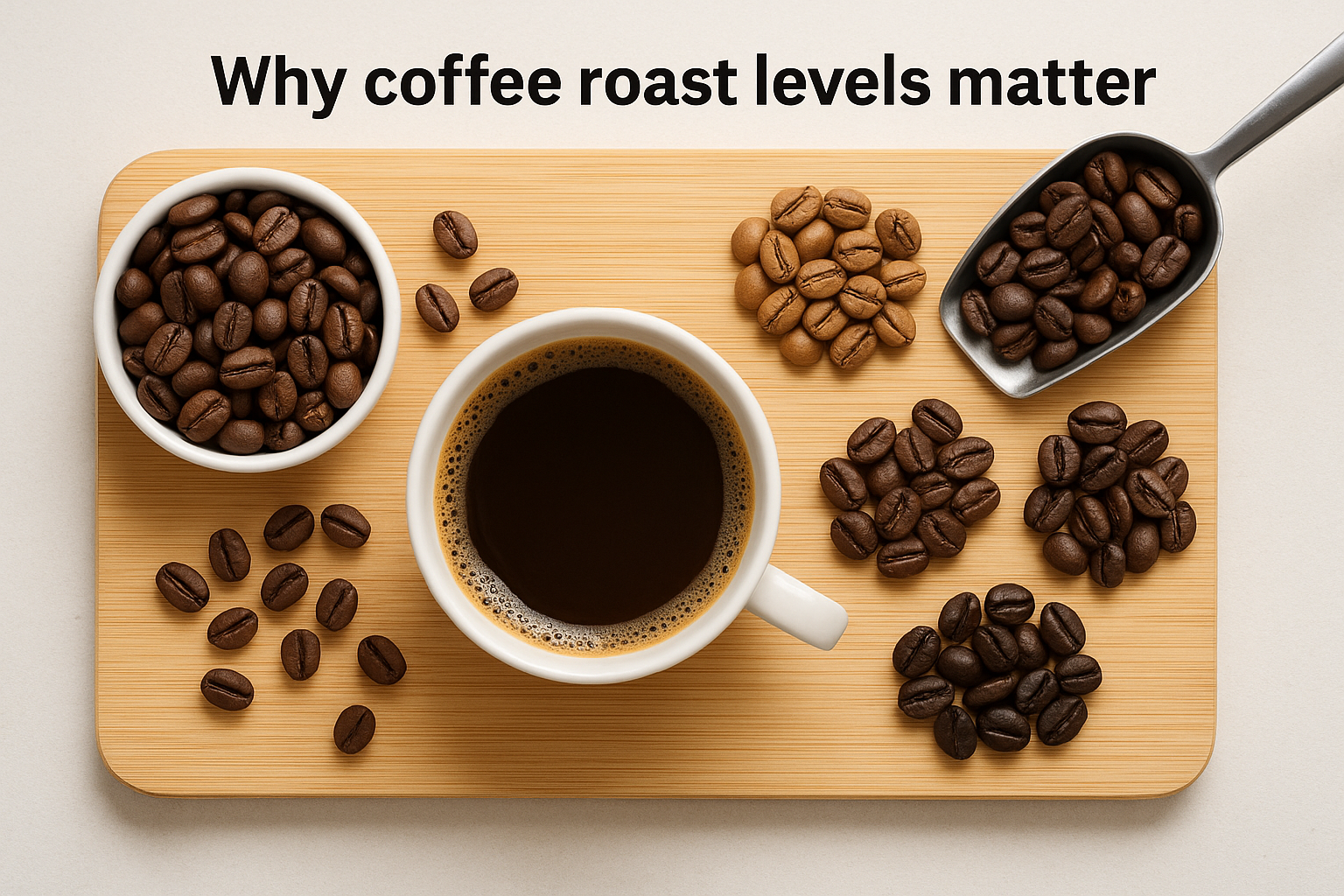
Understanding coffee roast levels explained gives you control over your morning brew. You’ll stop buying coffee that disappoints you and start choosing beans that match exactly what you want to taste. If you add milk or cream to your coffee, you need a roast level that holds up to those additions. If you drink it black, you want a roast that balances acidity with sweetness.
The roast level affects every sensory aspect of your coffee from the first smell to the last sip.
Different roast levels also pair better with specific brewing methods. Light roasts shine in pour-over methods, while dark roasts excel in espresso machines. When you match the right roast to the right brewing method, you extract the best possible flavors from your beans.
How to choose your ideal roast level
Your daily coffee ritual tells you which roast level works best for your cup. Start by thinking about how you prepare your coffee each morning and what flavors you want to taste. The right roast level makes the difference between coffee you tolerate and coffee you crave. Most coffee drinkers settle for whatever bag looks good at the store, but you can do better by matching the roast to your specific needs.
Consider how you drink your coffee
Black coffee drinkers need different roast levels than those who add milk or sugar. If you drink your coffee black, light to medium roasts give you the most complexity and interesting flavors. The natural characteristics of the bean shine through without any additions to mask them. When you add milk, cream, or sugar, you need a medium to dark roast that holds its own against those additions. Light roasts often disappear completely when you pour in cream, leaving you with a weak, watery taste.
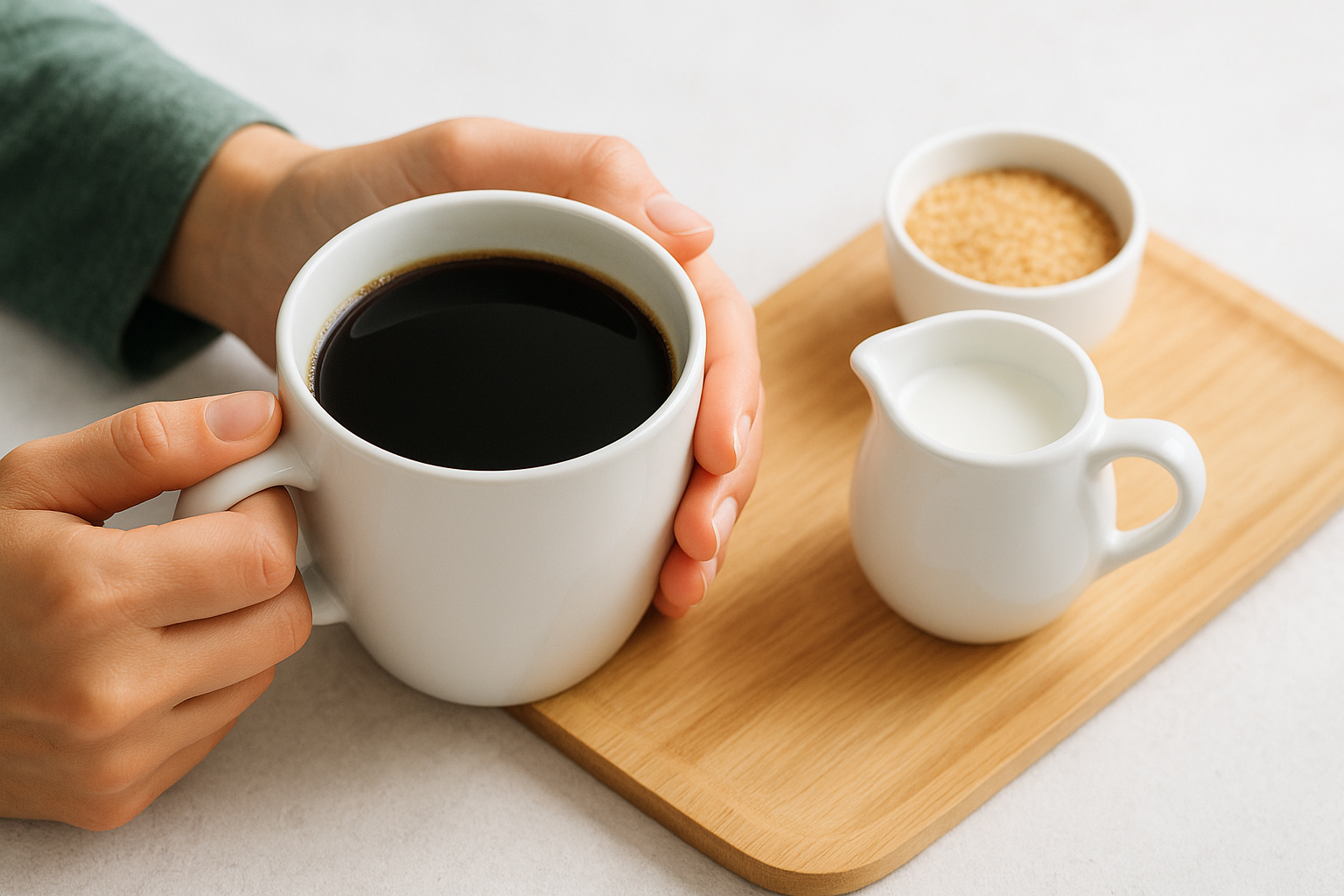
Your additions to coffee determine which roast level delivers the flavor you actually want to taste.
Match roasts to your taste preferences
Choose light roasts when you prefer bright, fruity, and floral notes in your coffee. These roasts highlight the bean’s origin and give you a clean, crisp cup. Medium roasts work best if you want balance between origin flavors and roasted sweetness. You get caramel notes without losing the coffee’s natural character. Dark roasts deliver bold, rich flavors with chocolate and toasted nut notes when you want a full-bodied cup with low acidity. Think about the other foods and drinks you enjoy. If you like citrus and berries, light roasts match your palate. If you prefer dark chocolate and nuts, dark roasts suit your taste preferences better.
Understanding light, medium and dark roasts
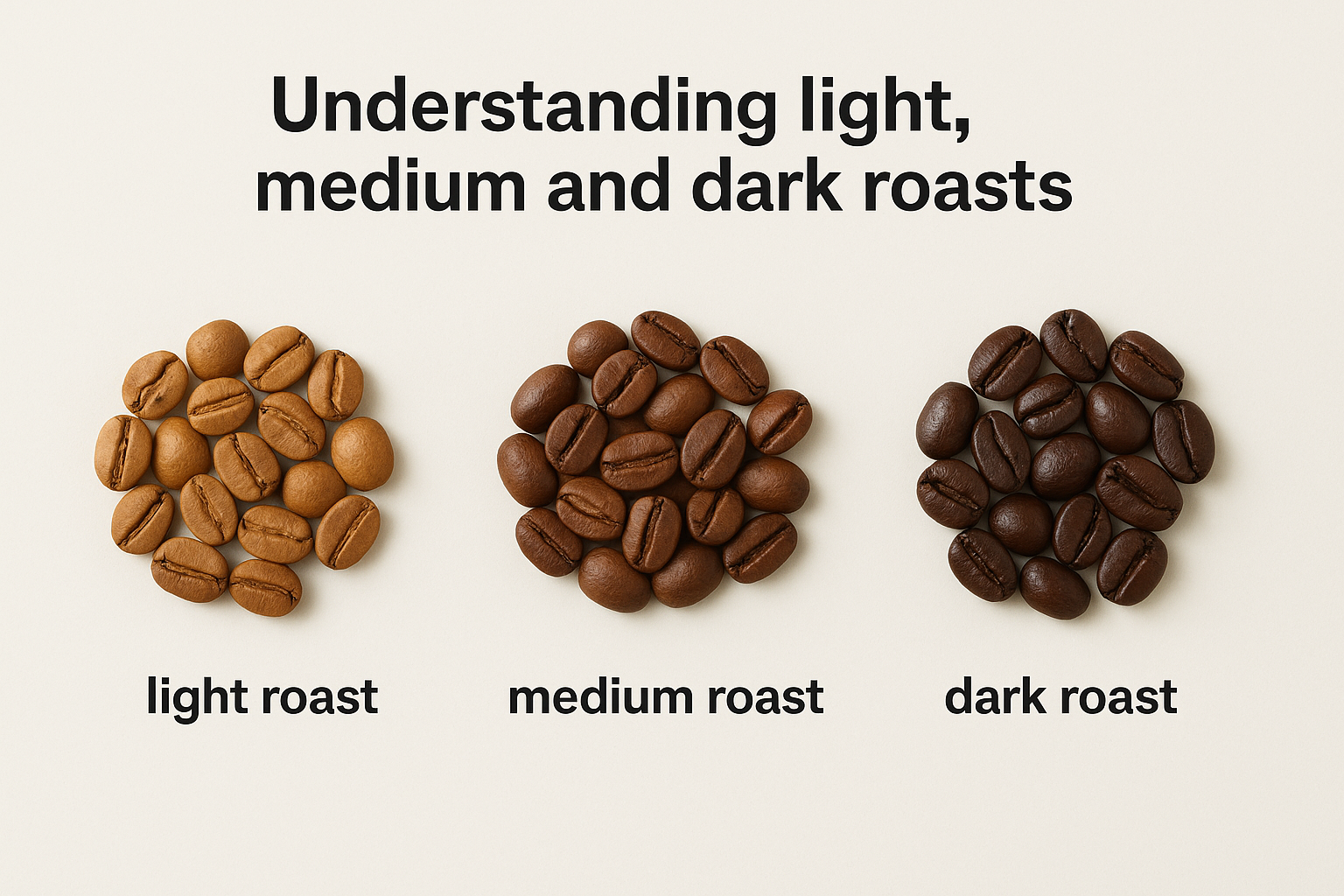
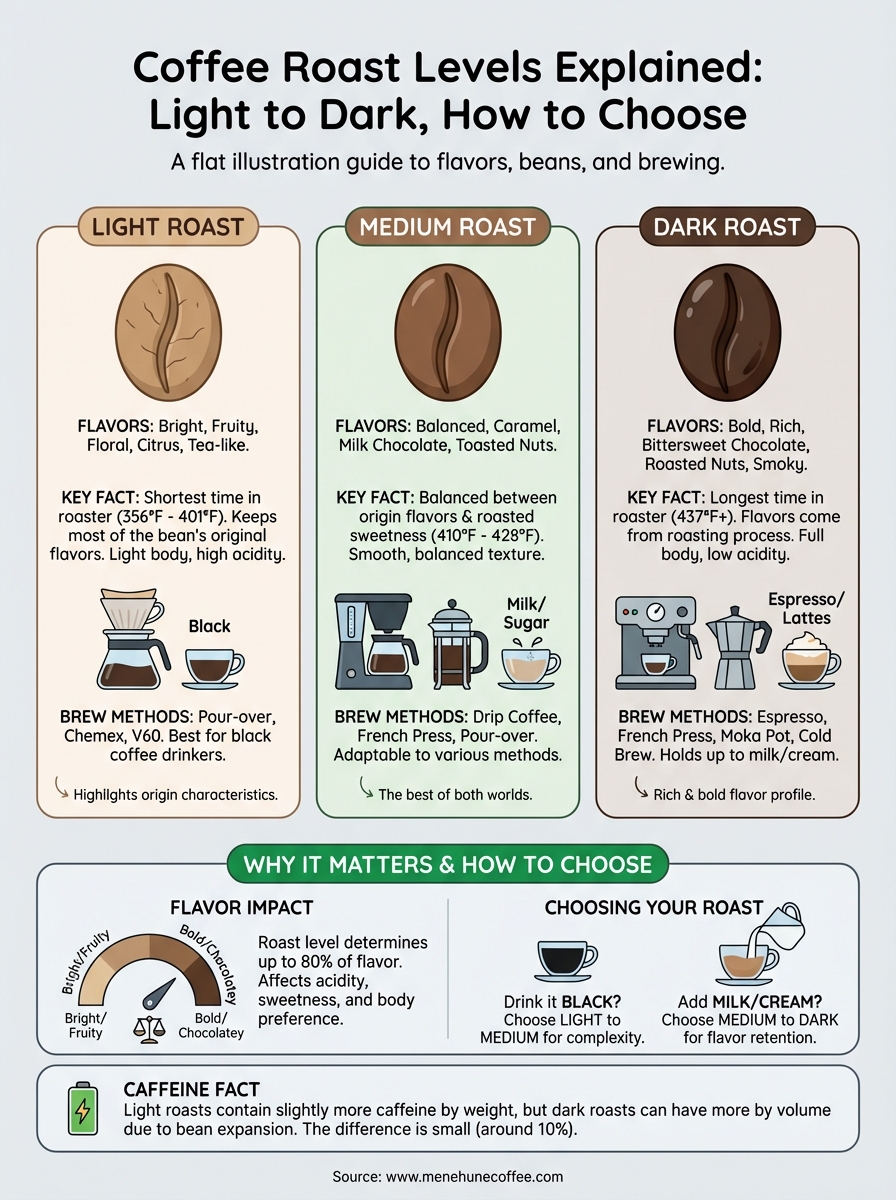
Coffee roast levels explained breaks down into three primary categories that each deliver distinct characteristics in your cup. Light roasts spend the shortest time in the roaster and reach internal temperatures of 356°F to 401°F. Medium roasts develop between 410°F and 428°F, while dark roasts push beyond 437°F and sometimes reach 464°F. These temperature ranges create the visible color differences you see on the beans and the flavor profiles you taste in your brewed coffee.
Light roast characteristics
Light roasts maintain most of the bean’s original flavors and showcase what coffee professionals call "origin characteristics." The beans appear light brown with a dry surface and no visible oils. During the roasting process, light roasts finish around or just after the first crack, which sounds like popcorn popping. You’ll taste bright acidity, floral notes, and fruity flavors like berries, citrus, or stone fruits in these roasts. The body stays light and tea-like, which works best when you want to experience the unique qualities of single-origin coffees.
Medium roast characteristics
Medium roasts balance origin flavors with roasted sweetness through additional time in the roaster. The beans develop a medium brown color with a slightly fuller body than light roasts. These roasts finish between first and second crack, creating caramelized sugars that add sweetness without overwhelming the coffee’s natural characteristics. You’ll notice flavors like milk chocolate, caramel, toasted nuts, and gentle fruit notes. Medium roasts work for most brewing methods and satisfy the widest range of coffee drinkers.
Medium roasts give you the best of both worlds when you can’t decide between bright complexity and roasted richness.
Dark roast characteristics
Dark roasts develop bold, rich flavors that come primarily from the roasting process itself. The beans turn dark brown to almost black with a shiny, oily surface. These roasts finish during or after second crack when the bean’s cellular structure breaks down and releases oils to the surface. You’ll taste bittersweet chocolate, roasted nuts, caramel, and sometimes smoky notes. Dark roasts deliver full body, low acidity, and flavors that hold up well in espresso or when you add milk.
Taste, body and caffeine across roast levels
Understanding coffee roast levels explained means knowing how taste, body, and caffeine content shift as beans spend more time in the roaster. Each roast level creates a distinct sensory experience that affects what you smell, taste, and feel in every sip. The transformation happens because heat breaks down acids, caramelizes sugars, and changes the bean’s density. These changes impact everything from the first aroma when you open the bag to the finish that lingers after you swallow.
Taste and body progression
Light roasts deliver bright acidity with tea-like body and complex flavors that highlight the coffee’s origin. You’ll taste citrus, berries, florals, and sometimes even wine-like notes in these roasts. Medium roasts reduce acidity while increasing body to a smooth, balanced texture that coats your mouth more than light roasts. The flavors shift toward caramel, milk chocolate, and toasted nuts with less pronounced fruit notes. Dark roasts create full body with heavy mouthfeel and bittersweet flavors dominated by chocolate, roasted nuts, and sometimes smoky undertones. The acidity drops significantly, giving you a mellower cup that feels richer on your palate.
Body increases as roast level deepens because the bean’s structure breaks down and releases oils that create a heavier mouthfeel.
Caffeine myths and facts
Light roasts contain slightly more caffeine by weight than dark roasts because less mass burns off during shorter roasting times. The difference amounts to only about 10% between light and dark roasts. When you measure by volume instead of weight, dark roasts can actually deliver more caffeine because the beans expand during roasting and you fit more beans into a scoop.
Brew methods that fit each roast level
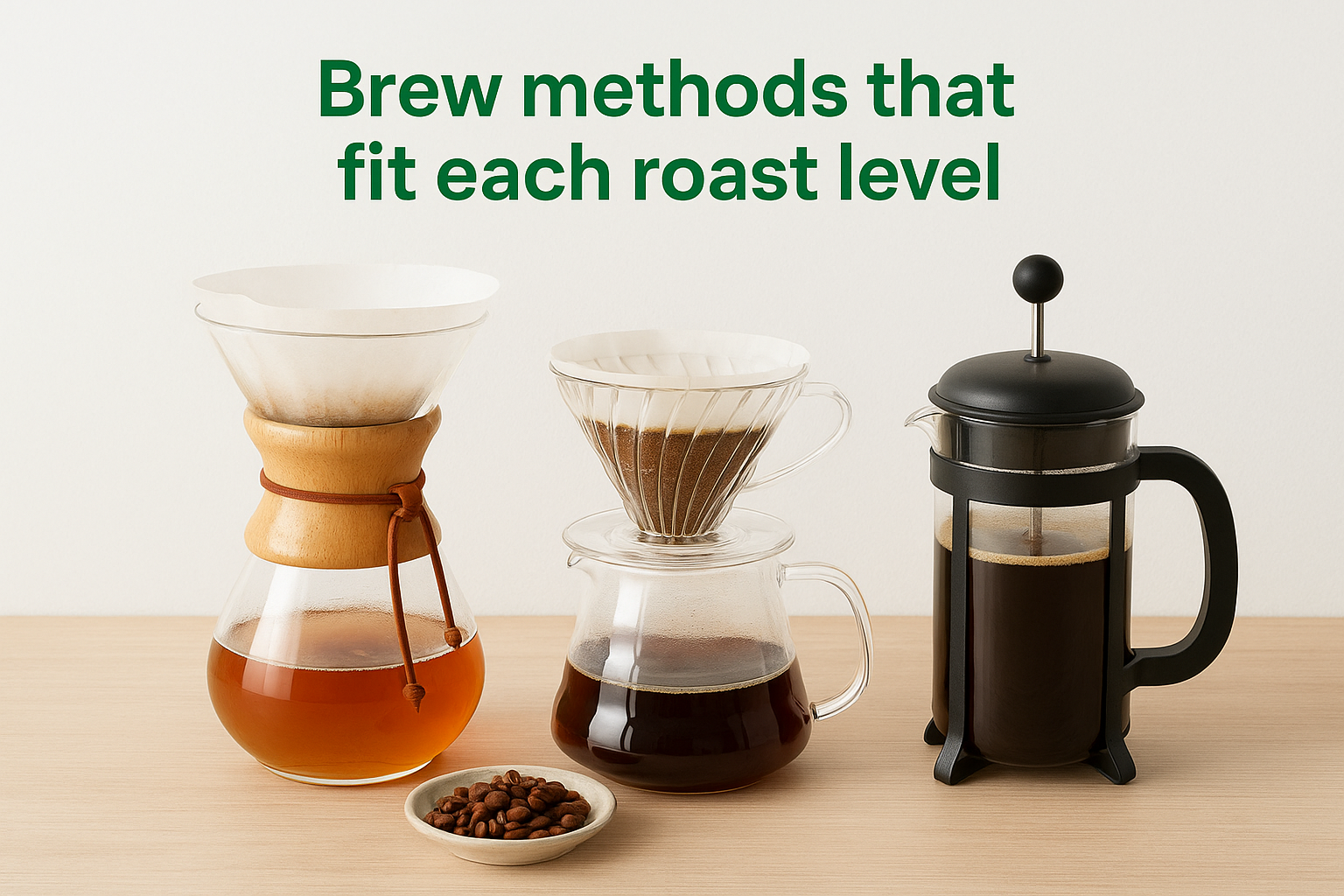
Matching coffee roast levels explained with the right brewing method extracts the best flavors from your beans. Light roasts need gentle extraction that preserves their delicate flavors, while dark roasts require bold methods that complement their richness. The brewing method you choose affects how much of the coffee’s oils, acids, and compounds end up in your cup.
Light roasts and delicate brewing
Pour-over methods work best for light roasts because they highlight bright acidity and complex flavors through controlled extraction. Use water between 195°F and 205°F with a medium-fine grind. Chemex and V60 brewers bring out the floral and fruity notes that make light roasts special.
Pour-over brewing extracts the subtle nuances in light roasts that other methods might miss or overwhelm.
Medium roasts and versatile methods
Medium roasts adapt to almost any brewing method because their balanced profile works with different extraction styles. Drip coffee makers, French press, and pour-over all produce excellent results. The roast’s natural balance means you get consistent flavor regardless of your equipment.
Dark roasts and bold extraction
Espresso machines and French press methods suit dark roasts because they extract the rich oils and full body these beans offer. Use water at 185°F to 195°F to avoid over-extraction. Moka pots and cold brew also excel with dark roasts, creating concentrated, smooth coffee that highlights chocolate and caramel notes.
Putting it all together
Coffee roast levels explained gives you the knowledge to choose beans that match your taste preferences and brewing method. Light roasts deliver bright, complex flavors that work best in pour-over brewing when you drink coffee black. Medium roasts offer balanced sweetness and body that adapt to any brewing method or addition you prefer. Dark roasts create rich, bold flavors that hold up to milk and excel in espresso or French press.
Your next step is finding quality beans roasted to the level you want. Explore authentic Kona coffee from Menehune Coffee Company where Hawaiian-grown beans receive careful roasting that brings out their natural characteristics. Start with one roast level that sounds closest to your preferences, then experiment with others to discover what you enjoy most in your daily cup.