Kona Coffee Taste Profile: Notes, Body, And Aroma Explained
People describe Kona coffee as smooth, rich, and unlike anything else they’ve tasted, but what exactly makes it so different? The kona coffee taste profile is shaped by a specific combination of volcanic soil, elevation, and microclimate found only on the slopes of Mauna Loa on Hawaii’s Big Island. It’s a cup that carries distinct flavor characteristics you won’t find in beans from other growing regions.
At Menehune Coffee Company, we grow, roast, and serve 100% Kona coffee from our home in Captain Cook, right in the heart of the Kona Coffee Belt. We taste these beans at every stage of production, from cherry to cup. That hands-on experience gives us a direct understanding of what shapes each flavor note, and it’s something we think about with every batch we roast. Our cafe customers and online subscribers often ask us the same question: what should I expect when I drink real Kona coffee?
This article breaks down the full sensory experience, the tasting notes, body, aroma, and finish, so you know exactly what to look for. Whether you’re trying Kona for the first time or you’ve been drinking it for years, understanding the profile helps you appreciate what’s in your cup and recognize the difference between authentic Kona and everything else.
Why Kona coffee tastes different
Most coffee-growing regions rely on a combination of altitude, rainfall, and temperature to produce quality beans. Kona has all three working together in a very specific and consistent way, and that combination is what makes the kona coffee taste profile so recognizable to anyone who drinks it. No other region on earth replicates these exact growing conditions, which is why you can taste something genuinely distinct in every cup of authentic Kona.
The Kona Coffee Belt
The Kona Coffee Belt runs along the western slopes of Mauna Loa and Hualalai on Hawaii’s Big Island, sitting between roughly 600 and 2,500 feet in elevation. At that altitude range, temperatures stay mild throughout the year, rarely dropping below 55°F or rising above 85°F. The belt receives consistent afternoon cloud cover that acts as natural shade, which slows the ripening of the coffee cherry significantly. That slower development gives the cherry more time to build complex sugars in the bean, and those sugars translate directly into the sweetness and depth you taste in your cup.
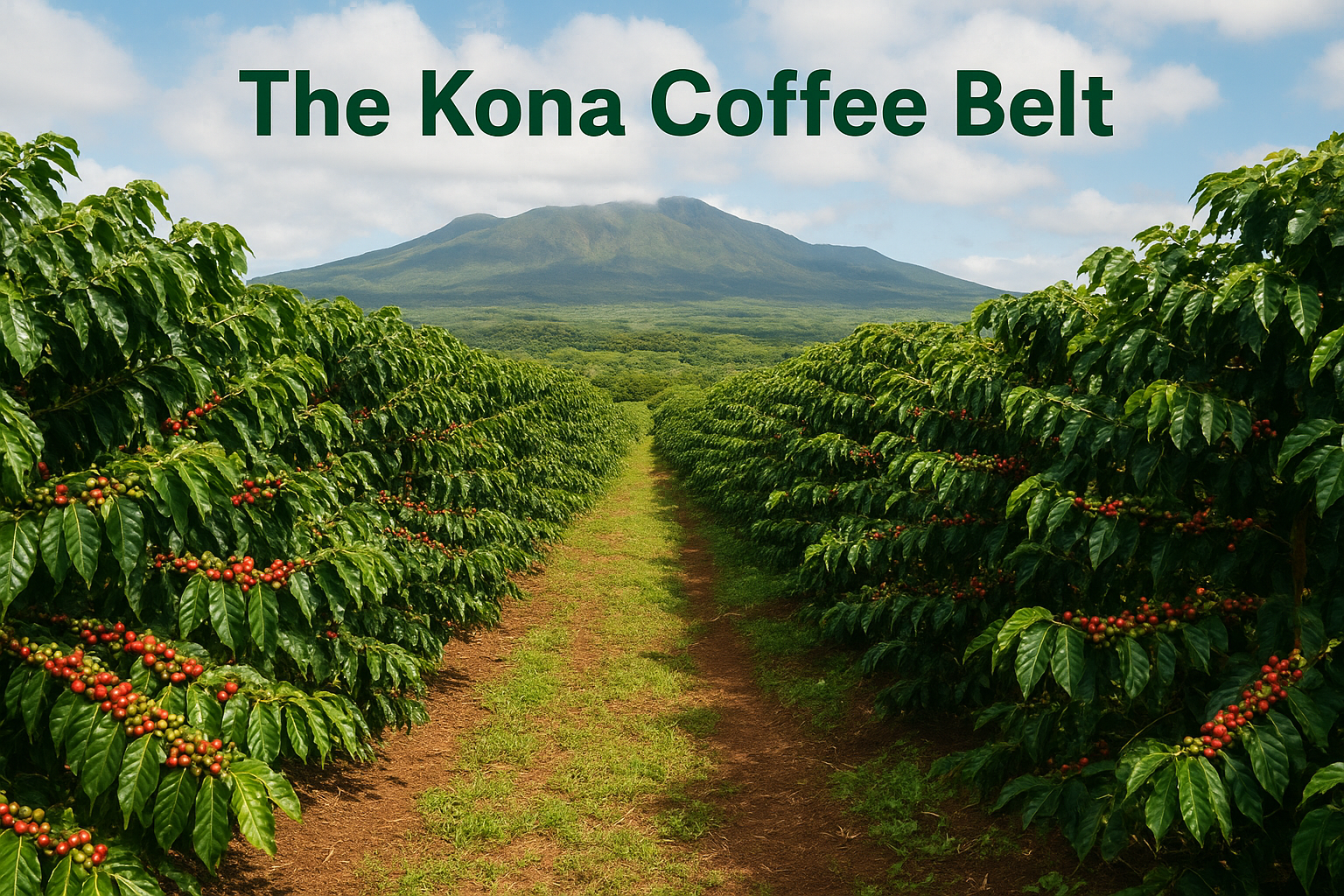
Slower cherry ripening gives each bean more time to develop its natural sugars, and that process is one of the clearest reasons 100% Kona coffee tastes noticeably sweeter and more nuanced than most other origins.
Volcanic soil and rainfall patterns
Kona’s volcanic soil drains well while retaining key minerals like potassium and phosphorus, both of which support healthy root systems and nutrient-rich cherries. The region also follows a reliable daily weather pattern: sunny mornings provide the plants with enough light for strong photosynthesis, and afternoon rain delivers steady moisture without waterlogging the roots. That natural balance reduces stress on the plant. You won’t find this specific combination of soil type and rainfall rhythm replicated anywhere else, and less-stressed coffee plants consistently produce beans with cleaner, brighter, and more balanced flavor.
Hand-picking and small-farm practices
Unlike large commercial coffee operations that rely on mechanical harvesting, most Kona farms are small family operations that pick cherries entirely by hand. Hand-picking allows farmers to select only the ripe cherries during each pass through the trees, leaving unripe fruit to develop further on its own timeline. That selective process removes a significant source of bitterness and off-flavors. When you drink a cup of 100% Kona, every single cherry in that bag was individually chosen, and that care is something you can actually taste.
Kona coffee taste profile: body, acidity, sweetness
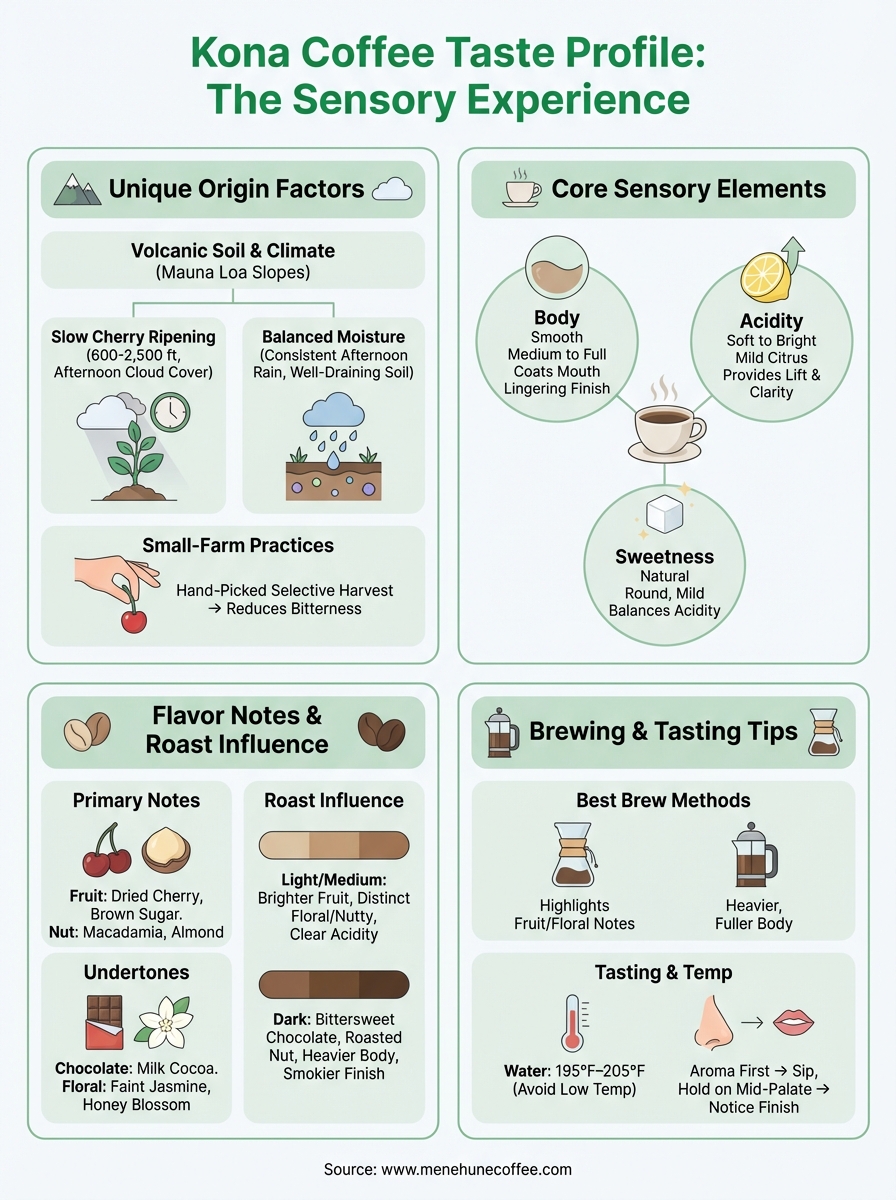
Three core sensory elements define the kona coffee taste profile before you pick up any individual flavor note: body, acidity, and sweetness. Understanding how each works, and how they balance together, gives you a clear framework for what to expect in your cup.
Body
Kona coffee has a medium to full body, which means it feels smooth and substantial on your palate without tipping into heavy or syrupy territory. That weight comes directly from the bean’s density, driven by slow cherry development at elevation.
You’ll notice the body most in the lingering finish. The coffee coats your mouth in a way that feels deliberate and clean, and that sensation persists long after you swallow. It’s one of the qualities that makes Kona feel more satisfying than lighter-bodied coffees.
Acidity
Kona’s acidity lands somewhere between soft and bright, closer to mild citrus than the sharp, piercing tartness you’d find in East African varieties. It gives the cup lift and clarity without dominating the other characteristics.
The balance between Kona’s acidity and its natural sweetness is one of the clearest markers of a properly grown and roasted 100% Kona bean.
Sweetness
Natural sweetness in Kona comes from the extended ripening process on the tree itself, not from anything added at the roaster. The slow build of sugars in each cherry produces a mild, round sweetness that fills the finish and softens the acidity into something genuinely pleasant.
That sweetness is also why many people drink Kona without cream or sugar. The cup already carries enough natural balance that additives often work against the flavor rather than improving it.
Flavor notes you may taste in 100% Kona
The kona coffee taste profile delivers specific, recognizable notes that show up consistently across well-grown and properly roasted beans. These notes aren’t random. They’re the direct result of volcanic soil, slow cherry development, and careful hand-picking that define Kona’s growing region. Learning to identify these notes gives you a much richer experience every time you brew a cup.
Primary notes: fruit and nut
Most people tasting 100% Kona for the first time notice mild fruit tones early in the sip. Brown sugar, dried cherry, and a faint hint of stone fruit are common, showing up in the front and middle of your palate. These fruit-forward characteristics come directly from the extended ripening process on the tree.
The nutty quality in Kona coffee is one of the most consistent markers that separates it from other single-origin coffees.
You’ll also detect a gentle nuttiness that reads as macadamia, almond, or hazelnut depending on the roast. That note typically settles into the mid-palate and carries through to the finish, giving the cup a warm, grounded character that balances the fruit tones well.
Chocolate and floral undertones
Underneath the fruit and nut notes, subtle chocolate tones appear in most Kona cups. They lean toward milk chocolate or cocoa powder rather than intense dark chocolate, soft and background rather than dominant. Some lighter roasts also carry a faint floral note between jasmine and honey blossom that lifts the aroma just before your first sip.
Here’s a quick reference of the most common tasting notes in 100% Kona:
- Brown sugar and dried cherry
- Macadamia nut or almond
- Mild cocoa or milk chocolate
- Faint jasmine or honey blossom
- Clean, sweet finish
How roast level shifts Kona flavor
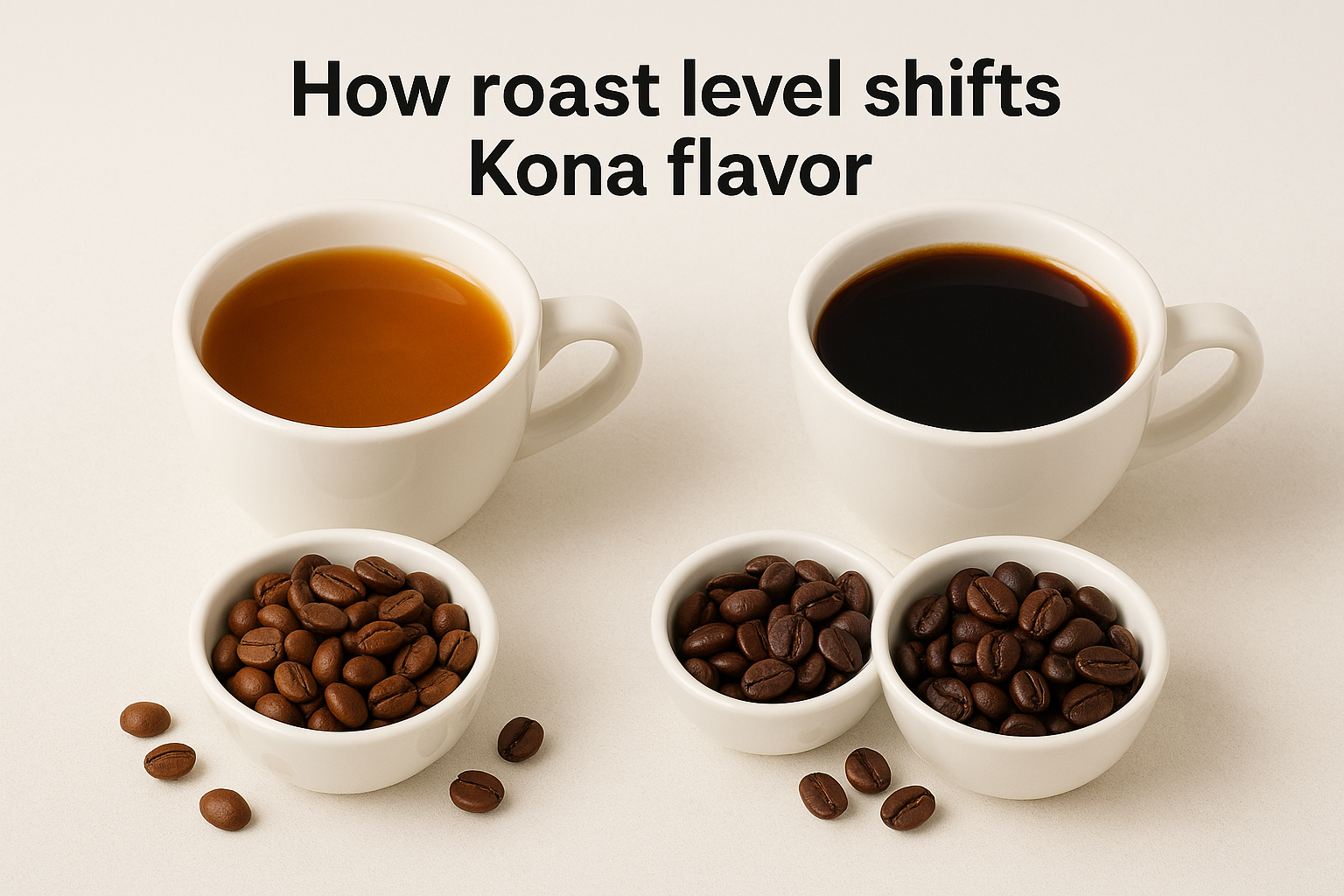
Roast level is one of the most direct ways to change what you taste in your cup. The kona coffee taste profile stays recognizable across all roast levels, but the specific notes that come forward, and the ones that recede, shift meaningfully depending on how long and how hot the beans are roasted. Knowing this helps you pick the right roast for what you actually enjoy.
Light and medium roast
A light or medium roast preserves the most of Kona’s origin character. You’ll taste brighter fruit tones like dried cherry and brown sugar more clearly, and the floral and nutty notes stay forward and distinct. The acidity also reads more clearly at lighter roast levels, giving the cup a clean, lifted quality that highlights the sweetness of the bean without interference from the roast itself. If you want to experience what the terroir of the Kona Coffee Belt actually delivers, a light or medium roast is where you’ll find it most clearly.
The lighter the roast, the more the natural flavor of the bean itself drives the cup rather than the roasting process.
Dark roast
A dark roast shifts the flavor profile toward deeper, more intense territory. The fruit tones move into the background, and bittersweet chocolate and roasted nut notes take over the front and mid-palate. The body feels heavier and more pronounced, and the finish carries a longer, smokier aftertaste than you’d get from lighter roasts. Dark roast Kona still holds its signature smoothness and lacks the harsh bite you’d find in a dark-roasted commodity bean, but the delicate origin notes become secondary to the roast character.
How to taste and brew Kona at home
Getting the most from the kona coffee taste profile starts before you take your first sip. The way you brew and the attention you bring to the cup both shape how clearly you’ll pick up on Kona’s distinct characteristics. A few simple adjustments to your process make a real difference in what you actually taste.
Choose the right brew method
Pour-over and French press are the two methods that let Kona’s natural flavor come through most clearly. Pour-over brewing highlights the brighter fruit and floral notes by keeping the water contact time precise and consistent. French press produces a heavier, fuller-bodied cup that brings the chocolate and nut tones forward more prominently. Either method works well, but avoid drip machines with low-temperature heating elements, since water below 195°F won’t extract the full range of flavor the bean holds.
Water temperature between 195°F and 205°F pulls the best out of Kona beans without introducing bitterness.
Taste with intention
Pour your cup and let it sit for two minutes before drinking. Smell the aroma first, noting anything that reads as fruit, chocolate, or floral. Take a small sip and hold it on your mid-palate briefly before swallowing, then pay attention to the sweetness in the finish and how long it lingers.
Following this sequence each time builds your ability to recognize what’s actually in the cup:
- Notice the aroma before your first sip
- Identify the front-palate impression (bright or soft)
- Name the mid-palate note (fruit, nut, or chocolate)
- Track the finish length and sweetness
Consistent attention over several cups trains your palate faster than any single tasting session will.
Next steps
The kona coffee taste profile covers a lot of ground, from volcanic soil and slow cherry ripening to body, acidity, sweetness, and how roast level shifts every one of those characteristics. You now have a clear picture of what separates 100% Kona from other coffees and what to look for in your cup the next time you brew it.
Putting that knowledge to use starts with getting your hands on the real thing. At Menehune Coffee Company, we grow, roast, and ship 100% Kona coffee directly from the slopes of Mauna Loa in Captain Cook, Hawaii. Every bag reflects the same care and attention we’ve described throughout this article. If you want to experience the full sensory profile for yourself, shop our 100% Kona coffee and taste what authentic Kona actually delivers. Free shipping on orders over $100.
Learn more about Brewing Tips