What Is Light Roast Coffee? Kona Guide To Taste & Caffeine
Light roast coffee often gets overlooked in favor of its bolder, darker cousins, but that’s a mistake. At Menehune Coffee Company, we’ve spent years roasting Kona beans on the slopes of Mauna Loa, and we can tell you firsthand: understanding what is light roast coffee unlocks a completely different side of your cup. Light roasts showcase the true character of the bean, revealing flavors that darker roasts simply burn away.
If you’ve ever wondered why some coffee tastes bright and fruity while others taste smoky and bitter, the answer lies in roast level. Light roast beans are roasted at lower temperatures for shorter periods, which preserves their natural acidity and origin-specific flavors. For Hawaiian coffees like Kona, this means you’ll actually taste the volcanic soil, tropical climate, and careful cultivation that make our beans special.
This guide breaks down everything you need to know about light roast coffee, from its physical characteristics and flavor profile to caffeine content and how it stacks up against medium and dark roasts. Whether you’re a longtime coffee drinker or just starting to explore beyond your usual order, you’ll walk away knowing exactly what makes light roast worth trying.
What makes a coffee a light roast
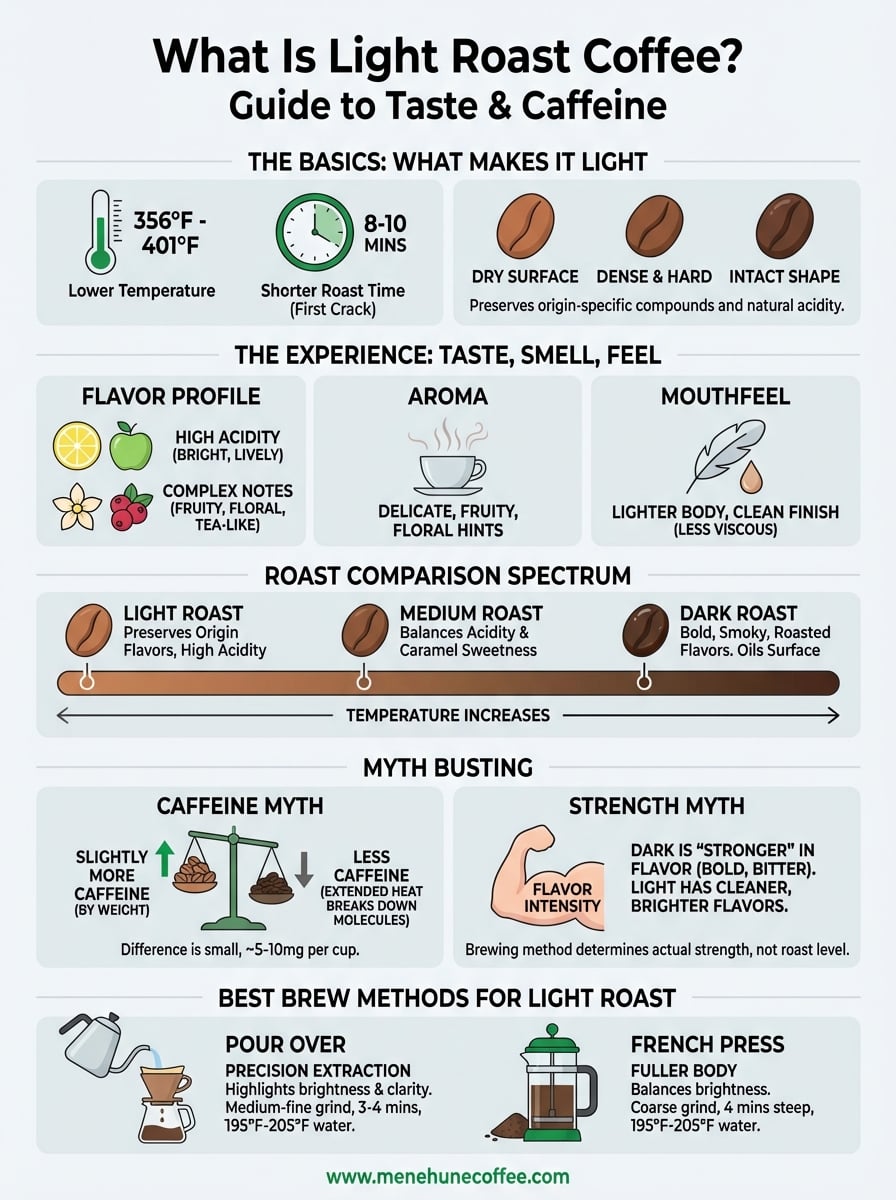
Roast level determines what is light roast coffee, and it all comes down to temperature control and timing. Light roast beans reach an internal temperature of 356°F to 401°F during the roasting process. This temperature range sits below what’s called the “first crack,” a popping sound that occurs when moisture inside the bean rapidly expands and breaks through the cell structure. Your roaster pulls light roast beans either right at or just after this first crack.
Temperature and timing
The roasting process for light roast coffee typically lasts 8 to 10 minutes, considerably shorter than medium or dark roasts. During this time, the beans undergo physical and chemical changes that affect everything from color to flavor. You’ll notice that heat application happens gradually at first, allowing the beans to dry without burning their exterior. The roaster then increases temperature to reach that critical first crack point, where the transformation from green bean to light roast coffee happens quickly.
Light roast coffee preserves the bean’s original characteristics because lower temperatures prevent the breakdown of origin-specific compounds.
Physical characteristics
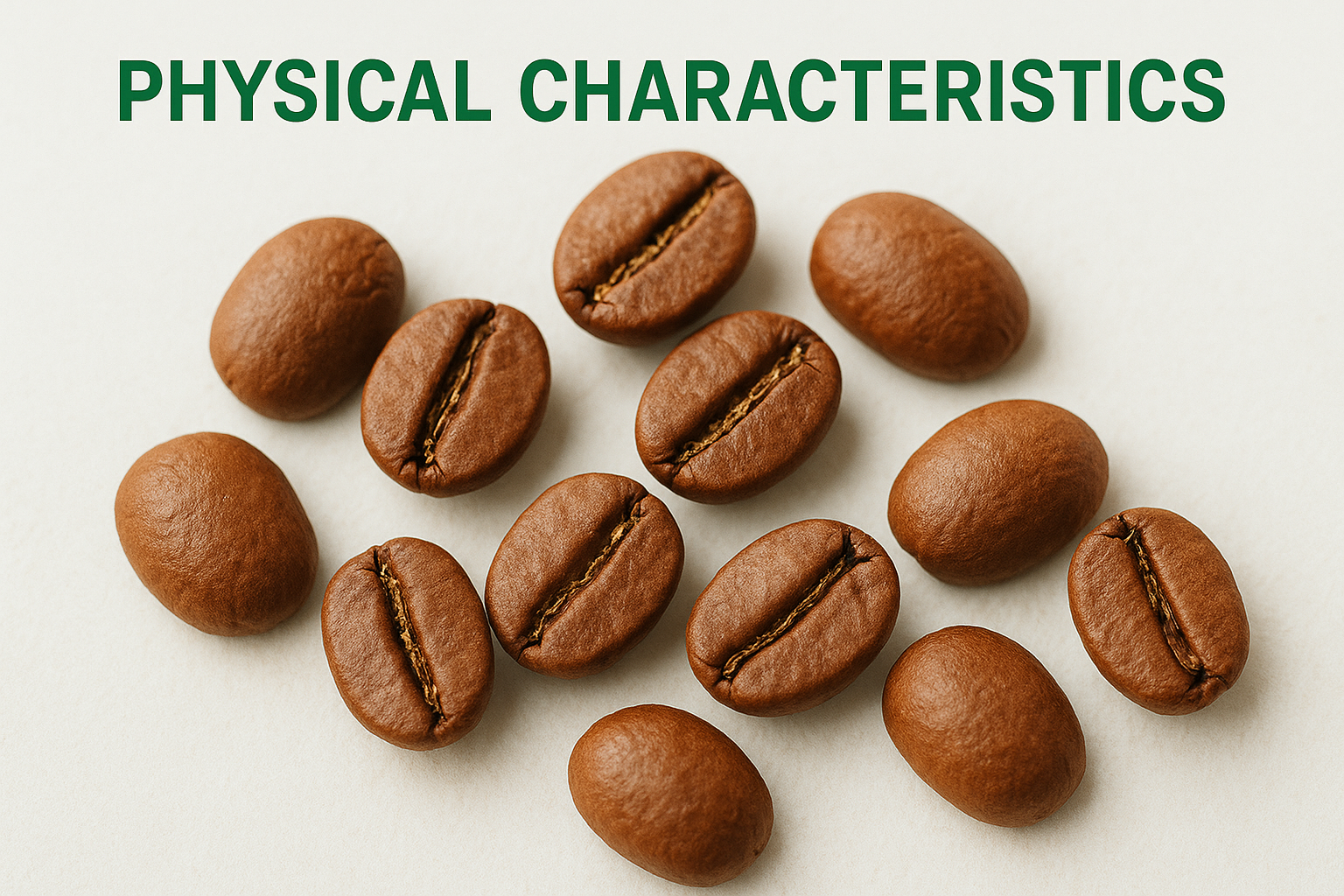
Light roast beans have distinct visual markers that make them easy to identify. The surface remains dry without any visible oils, unlike dark roasts where oils migrate to the surface due to higher heat. Your light roast beans will appear light brown or cinnamon-colored, and they’ll actually be denser and harder than darker roasts because the cellular structure hasn’t broken down as much. When you grind light roast beans, you’ll need slightly more force because of this density. The bean’s original shape stays intact, with minimal expansion compared to the swollen, porous structure you see in dark roasts.
How light roast tastes, smells, and feels
Understanding what is light roast coffee requires experiencing its unique sensory profile. Light roast delivers high acidity that creates a bright, lively taste on your palate, similar to citrus fruits or green apples. You’ll notice complex flavor notes that reflect where the beans grew, including floral hints, berry-like sweetness, or even tea-like qualities. These origin characteristics stay intact because the shorter roasting time preserves the bean’s natural compounds.
Flavor profile
Your first sip of light roast coffee will hit you with noticeable acidity, which coffee professionals describe as brightness rather than sourness. This acidity makes the coffee taste crisp and clean, lifting the flavors across your tongue. Hawaiian Kona light roasts specifically showcase nutty undertones mixed with subtle sweetness, a direct result of our volcanic soil and high-altitude growing conditions. You won’t find the caramelized sugars or roasted flavors that develop during longer roasting times.
Light roast coffee lets you taste the terroir, the unique environmental factors that shaped each bean during cultivation.
Aroma and mouthfeel
The aroma of light roast coffee carries fruity and floral notes that smell almost delicate compared to darker roasts. When you brew a fresh batch, you might detect hints of jasmine, bergamot, or even honey. Your mouth experiences a lighter body that feels thinner and less viscous than dark roast, with a clean finish that doesn’t coat your palate.
Light vs medium vs dark roast
Understanding what is light roast coffee becomes clearer when you compare it directly to medium and dark roasts. The three roast levels exist on a temperature and time spectrum that fundamentally changes your coffee’s characteristics. Light roast sits at the bottom of this range, while dark roast pushes the beans to their upper heat limits. Each level produces distinct flavors, appearances, and physical properties that affect how you brew and taste your coffee.
Temperature ranges
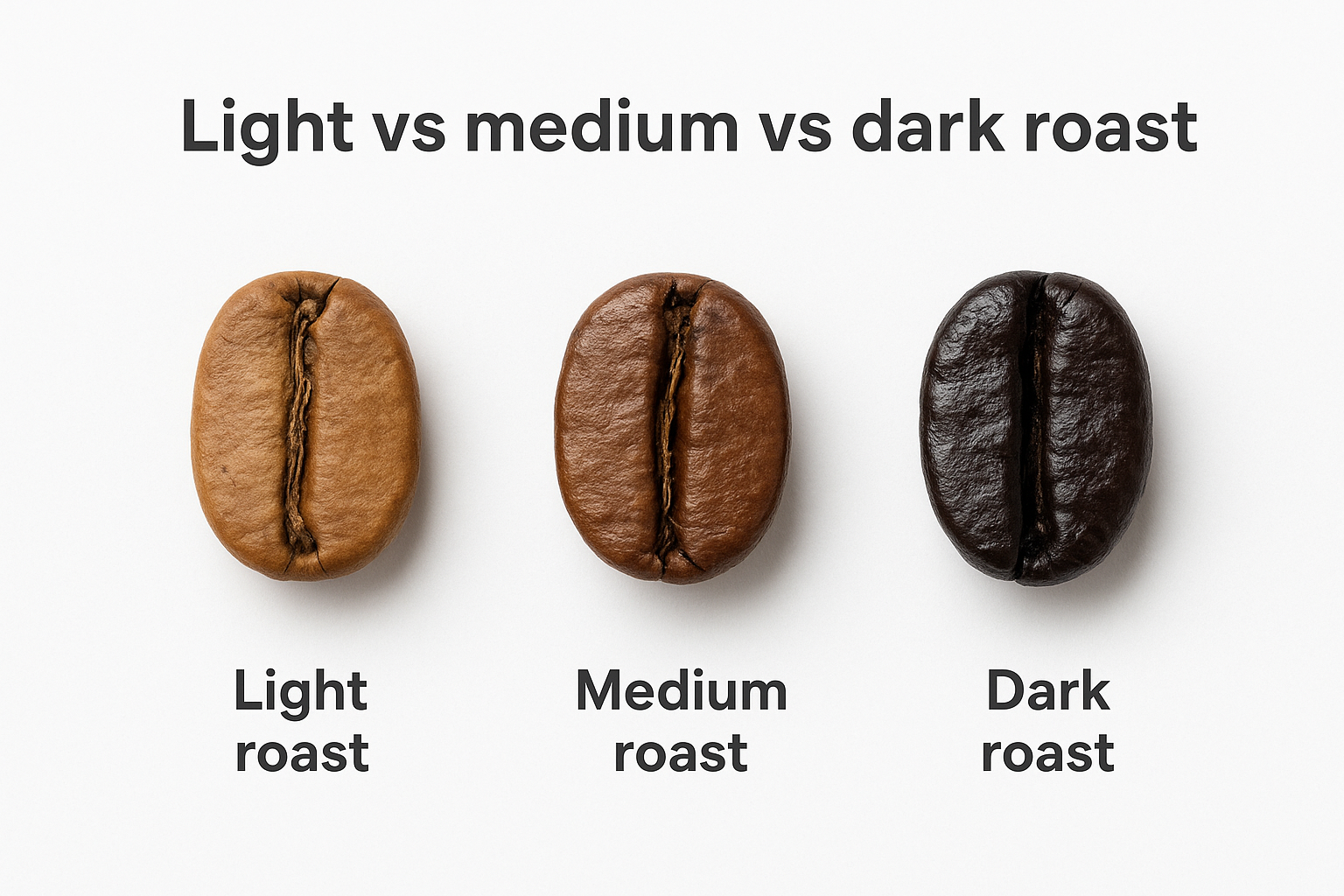
Light roast beans reach 356°F to 401°F and stop roasting at or just after first crack. Medium roast continues to 410°F to 428°F, landing between first and second crack with a slightly darker brown color. Dark roast pushes all the way to 464°F or higher, well past the second crack when oils visibly surface. Your brewing adjustments need to account for these differences because bean density decreases as roast level increases, changing extraction rates.
Higher temperatures break down origin-specific compounds, which is why darker roasts taste similar regardless of where the beans grew.
Flavor and appearance comparison
Light roast preserves bright acidity and origin flavors like fruit and floral notes, while medium roast balances acidity with developing caramel sweetness. Dark roast replaces origin characteristics entirely with bold, roasted flavors like chocolate, smoke, or char. Visually, you’ll spot light roast by its dry, cinnamon-brown surface versus medium’s richer brown and dark roast’s oily, nearly black appearance.
Caffeine and strength myths explained
You’ve probably heard that dark roast coffee contains more caffeine or that it’s objectively “stronger” than light roast. These myths persist across coffee shops and home kitchens, but understanding what is light roast coffee means busting these common misconceptions. The reality flips the script on what most people believe about roast levels and their effects on your cup. Your caffeine intake and flavor intensity depend on multiple factors beyond just roast darkness.
The caffeine reality
Light roast coffee actually contains slightly more caffeine than dark roast when measured by weight. The extended roasting time required for dark roasts breaks down caffeine molecules, reducing the overall content. Your light roast beans retain more of their original caffeine concentration because the shorter roasting process preserves these compounds. The difference remains small, typically only 5 to 10 milligrams per cup, but it adds up over multiple servings.
Measuring by volume instead of weight can reverse this difference because dark roast beans expand more during roasting, meaning you fit fewer beans in your scoop.
What strength actually means
When people call dark roast “stronger,” they’re describing flavor intensity, not caffeine content. Dark roast tastes bolder and more aggressive on your palate because roasting creates smoky, bitter compounds that overwhelm your taste buds. Light roast delivers cleaner, brighter flavors that some perceive as weaker, but your brewing method determines actual strength more than roast level ever will.
Best brew methods for light roast
Your brewing method makes or breaks light roast coffee because these delicate beans require precise extraction. Understanding what is light roast coffee means knowing that these denser beans need longer contact time and slightly hotter water than darker roasts. The right brewing technique pulls out those bright, complex flavors without creating sourness or weak body. Your water temperature should sit between 195°F and 205°F, and you’ll need to adjust your grind size based on the method you choose.
Pour over and drip methods
Pour over brewing gives you complete control over extraction, making it perfect for light roast coffee. Your water flows through the grounds at a steady pace, extracting all those nuanced flavors that make light roast special. Adjust your grind to medium-fine and aim for a total brew time of 3 to 4 minutes. Drip coffee makers work similarly and produce consistent results when you use the right ratio.
Pour over methods highlight light roast’s brightness and clarity better than any other brewing technique.
French press considerations
French press creates a fuller body that balances light roast’s natural brightness. You’ll need a coarser grind and a 4 minute steep time to avoid over-extraction. The metal filter allows natural oils to pass through, adding texture that paper filters remove. This method works particularly well for Hawaiian Kona light roasts, where you want to taste both the bright acidity and subtle nutty undertones.
Final thoughts
Understanding what is light roast coffee opens up new dimensions in your daily cup. You’ve learned that these beans reach lower temperatures during roasting, which preserves their origin-specific characteristics and bright acidity. The myths about caffeine content don’t hold up when you measure by weight, and brewing methods make more difference to strength than roast level ever will.
Your next step involves tasting the difference yourself. Hawaiian Kona beans showcase everything that makes light roast special, from the volcanic soil’s influence to the clean finish that doesn’t coat your palate. When you brew light roast properly using the techniques we covered, you’ll experience flavors that darker roasts simply can’t deliver.
Ready to experience authentic Kona light roast? Browse our selection of 100% Kona Coffee roasted right here on the slopes of Mauna Loa. Each batch reflects our veteran-owned commitment to quality craftsmanship from bean to cup, and free shipping kicks in at orders over $100.