What Is Hawaiian Coffee? Kona Vs Hawaiian Blends Explained
So, what is Hawaiian coffee, exactly? If you’ve ever seen it on a menu or browsed bags online, you’ve probably noticed the price tag sits well above your average supermarket blend. There’s a reason for that, and it goes beyond clever branding. Coffee grown in Hawaii benefits from volcanic soil, elevation, and a microclimate that most coffee-producing regions can only dream about.
But here’s where it gets tricky: not all Hawaiian coffee is the same. A bag labeled “Kona Coffee” and one labeled “Hawaiian Blend” can be vastly different products in terms of origin, quality, and what’s actually inside. Understanding that distinction matters, especially when you’re spending more for what you believe is a premium cup. Mislabeling and vague packaging have confused coffee buyers for years, and it’s a problem worth clearing up.
At Menehune Coffee Company, we grow and roast 100% Kona Coffee on the slopes of Mauna Loa in Captain Cook, Hawaii. We deal with these questions daily, from visitors at our cafe to online customers placing their first order. This article breaks down the differences between Kona and Hawaiian blends, explains what makes Hawaiian-grown coffee unique, and helps you know exactly what you’re buying before you spend a dollar.
Why Hawaiian coffee costs more
When people ask what is Hawaiian coffee and why it costs so much, the answer starts with where and how it grows. Hawaii sits within a narrow agricultural belt between the Tropic of Cancer and the Tropic of Capricorn, the same band that produces most of the world’s coffee. But Hawaii adds something else on top of that: volcanic soil loaded with minerals, consistent rainfall patterns, and natural afternoon cloud cover that shields the coffee plants from harsh sun. These conditions don’t happen by accident, and they simply cannot be replicated somewhere cheaper.
The land plays a significant role
Hawaii’s coffee-growing regions sit at elevations between 1,000 and 2,500 feet, where temperatures stay cool enough to slow the development of the coffee cherry. That slower ripening concentrates sugars and flavor compounds inside the bean. The volcanic soil on slopes like Mauna Loa in the Kona district delivers trace minerals that contribute directly to the cup’s smoothness and complexity. You’re not paying for a location name printed on a bag. You’re paying for the result of geology working in the coffee’s favor across a very long and carefully managed growing season.
The slower a coffee cherry ripens, the more complex and developed the flavor becomes in the finished cup.
Small farms and hand-picked harvesting
Most Hawaiian coffee comes from small, family-owned farms that measure their acreage in the single digits rather than hundreds. These farms don’t run large mechanical harvesters across their land. Instead, workers hand-pick each cherry individually, selecting only the ones at peak ripeness. That process requires multiple passes through the same trees over the entire harvest season, which costs far more in labor than the strip-harvesting methods used in larger producing countries. In Hawaii, federal and state minimum wage laws apply, unlike many of the world’s largest coffee-producing regions where labor costs sit at a fraction of what American workers earn.
Limited supply meets consistent demand
Hawaii produces a relatively small volume of coffee each year compared to countries like Brazil or Colombia. The entire state grows coffee on roughly 9,000 acres total, and Kona accounts for a fraction of that figure. When you pair low annual production with consistent global demand from specialty buyers and consumers, prices rise. Supply and demand is a straightforward concept, but it carries serious weight when the entire growing region sits on a chain of Pacific islands with no practical room to scale production. That reality is why authentic Hawaiian coffee commands a premium, and why any bag priced like ordinary commodity coffee should raise a question or two before you buy it.
What Hawaiian coffee tastes like
Part of understanding what is Hawaiian coffee means knowing what to expect when you actually brew a cup. Hawaiian coffee, particularly from the Kona district, carries a flavor profile that stands apart from Central American or African varieties. The volcanic soil and slow-ripening conditions produce a bean that tends toward smoothness rather than sharp acidity, with natural sweetness that doesn’t require milk or sugar to soften any rough edges.
Kona’s signature flavor profile
Kona coffee typically presents notes of milk chocolate, brown sugar, and subtle fruit, with a body that feels medium-to-full in the cup. The finish is clean and lingers without any bitterness that would make you wince. What you won’t find is the bright, citrusy punch common to Ethiopian beans or the heavy earthiness associated with Indonesian varieties. Kona sits in a gentler range, approachable enough for casual drinkers while offering enough complexity to keep specialty coffee enthusiasts paying close attention.
That natural sweetness is a direct result of the slow cherry ripening process on high-elevation volcanic slopes.
How roast level changes the cup
Light and medium roasts preserve the most origin character, meaning you taste the soil, the climate, and the growing conditions more clearly. If you want to understand what a particular farm or region brings to the bean, roasting light lets those qualities show up in your mug. Dark roasts shift the flavor toward deeper chocolate and roasted nut tones, which many people prefer for espresso or cold brew applications. The underlying smoothness of Hawaiian coffee carries through at any roast level, which is one reason it works well across so many brewing methods, from a simple drip machine to a pour-over setup.
Kona vs Hawaiian blends explained
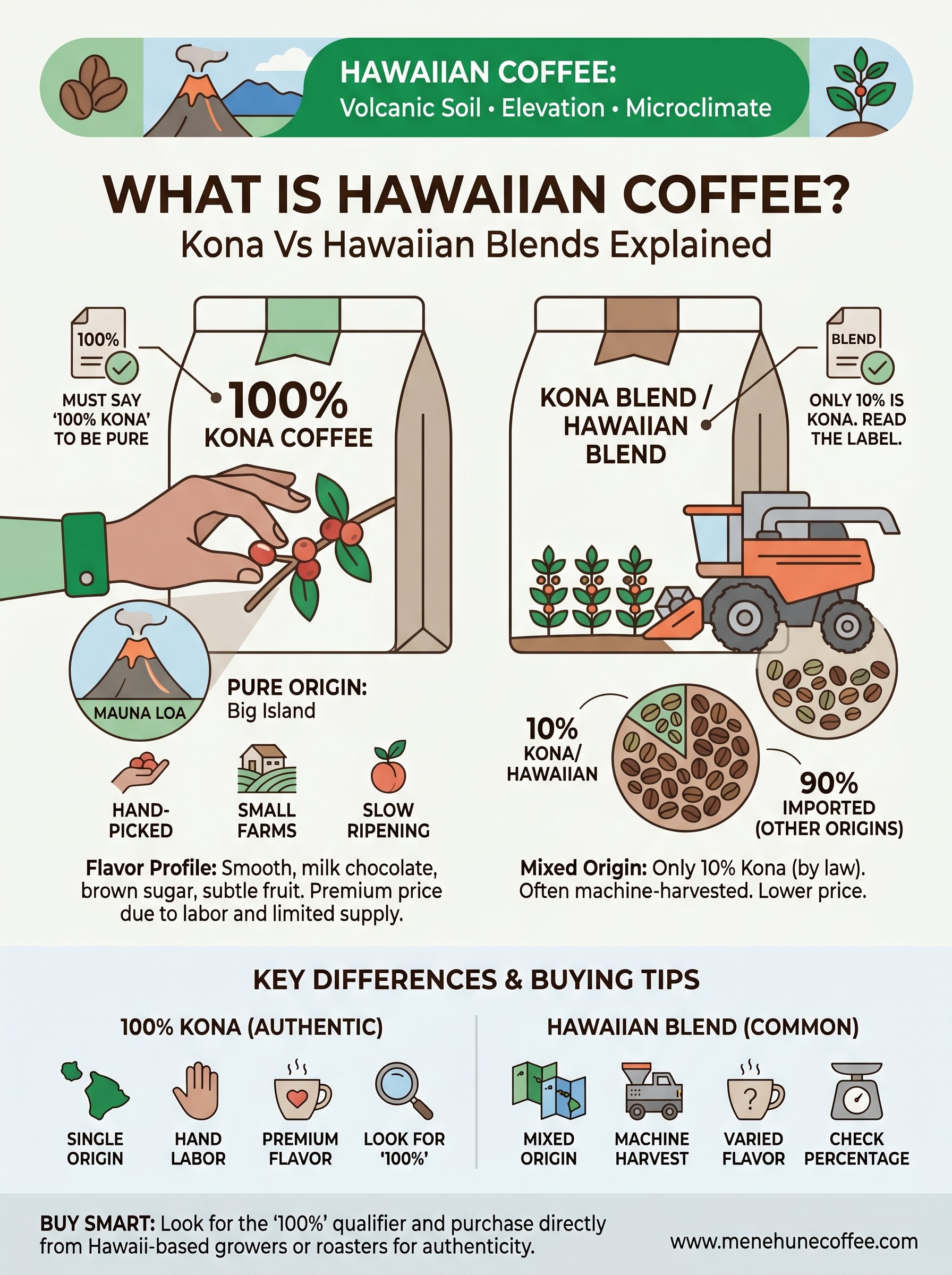
When people ask what is Hawaiian coffee, they often don’t realize there’s a meaningful legal and quality distinction between 100% Kona coffee and a product labeled “Kona blend” or “Hawaiian blend.” That difference matters more than most labels make obvious, so it’s worth knowing before you spend money on either.
What “100% Kona” actually means
A bag labeled 100% Kona coffee must contain beans grown exclusively within the Kona district on the Big Island of Hawaii. Hawaii state law requires this designation to reflect pure origin with no mixing from outside sources. That legal protection exists precisely because Kona’s reputation and the associated premium price make it a frequent target for dilution and mislabeling.
If a bag says “Kona” without the “100%” qualifier, read the fine print carefully before buying.
What goes into a Hawaiian blend
Hawaiian blends typically contain a small percentage of Kona or other Hawaiian-grown coffee mixed with beans sourced from other countries. Under Hawaii state law, a product sold as a “Kona blend” must contain at least 10% Kona coffee, with the remaining 90% coming from elsewhere. That’s a significant gap between what the label implies and what actually ends up in your cup.
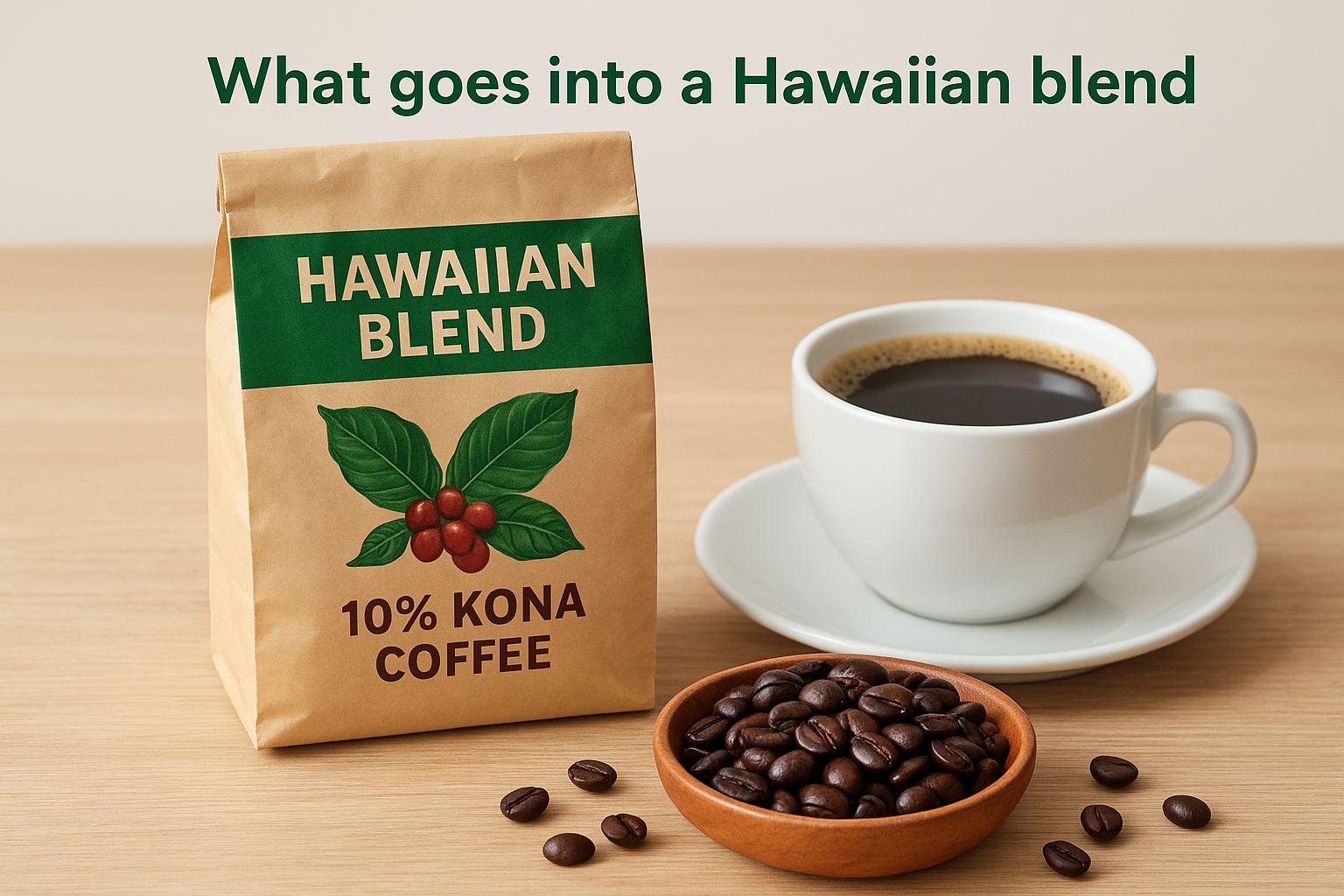
Some blends use Hawaiian coffee from other islands and growing regions outside Kona. These can still be quality products depending on the sourcing, but they will taste and perform differently from a 100% Kona single-origin coffee. Knowing what percentage of Hawaiian beans you’re actually getting helps you set accurate expectations for both flavor and price, so you’re not surprised when the cup doesn’t match what you thought you purchased.
Hawaii coffee regions beyond Kona
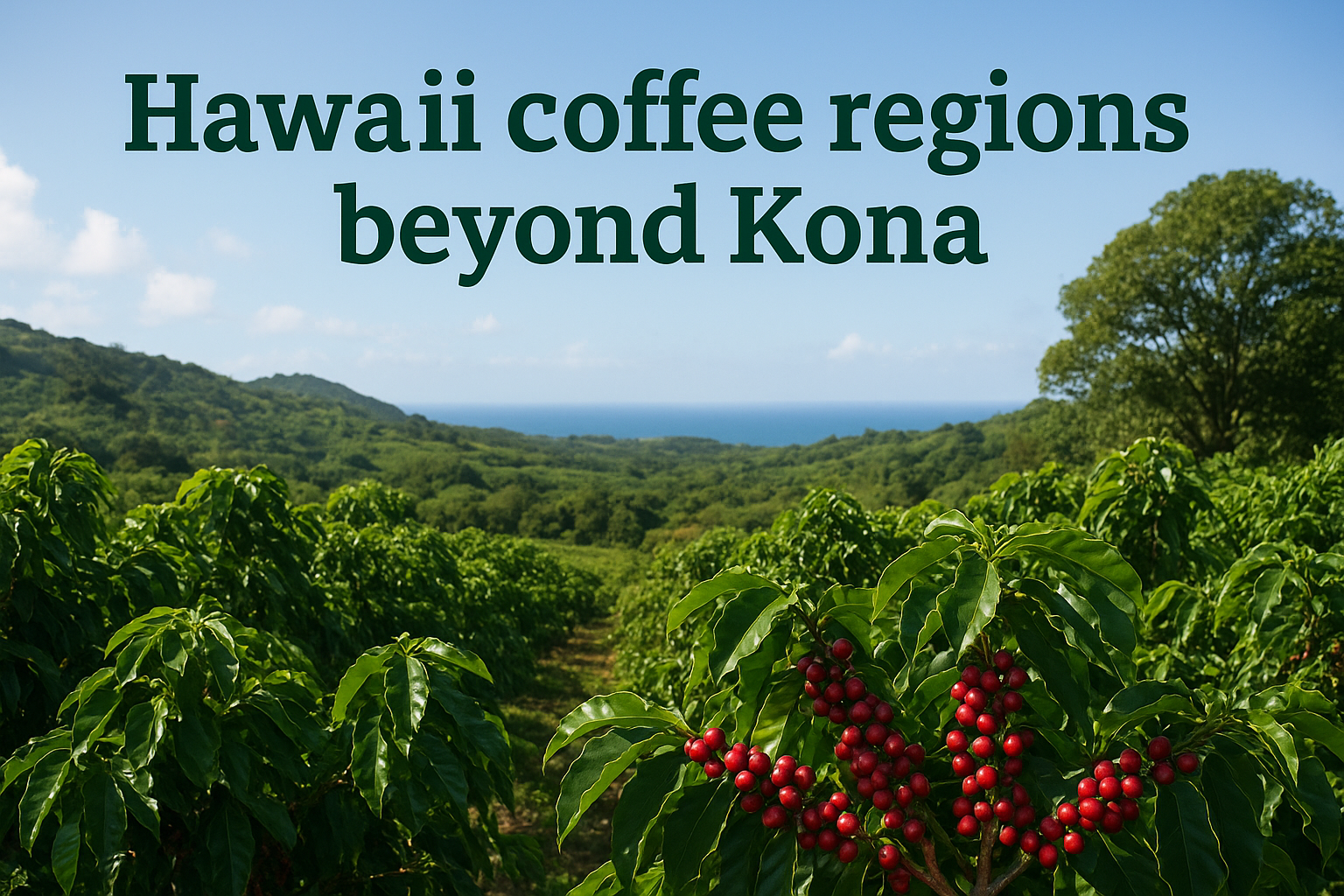
When people explore what is Hawaiian coffee, they often stop at Kona and go no further. That’s understandable since Kona carries the most name recognition and legal protection, but Hawaii grows coffee across multiple islands and districts, each bringing its own distinct character to the cup. Knowing these regions helps you make more informed decisions and opens the door to some genuinely impressive coffees that fly under most buyers’ radar.
Ka’u: The Big Island’s other growing district
Ka’u sits on the southern tip of the Big Island, below Kona and at similar elevations. Coffee grown here benefits from the same volcanic soil and Pacific climate, but the slightly more remote growing conditions and independent farming operations give Ka’u beans a profile that leans toward bright, complex acidity with floral notes. Several Ka’u farms have won top placements in specialty coffee competitions, earning serious attention from buyers who want something beyond the Kona name.
Ka’u coffee has taken top honors at Specialty Coffee Association competitions, putting it firmly on the map for quality-focused buyers.
Maui and Kauai: Different islands, different cups
Maui’s Kaanapali and Upcountry regions produce coffee at varying elevations, resulting in cups that range from fruity and light to heavier and more roasted in character. The growing volume on Maui stays relatively small, which keeps availability limited but quality consistent. Kauai Coffee Estate operates on a much larger scale, making it one of the biggest single coffee estates in the United States.
Here’s a quick look at how these two regions compare:
| Region | Scale | Flavor Tendency |
|---|---|---|
| Maui | Small-volume farms | Fruity to roasted, varied |
| Kauai | Large estate | Mild, approachable, consistent |
How to buy Hawaiian coffee without getting fooled
Understanding what is Hawaiian coffee is only half the battle. The other half is knowing how to spot the real thing when you’re shopping online or in a store. The specialty coffee market attracts its share of misleading packaging, and Hawaiian coffee specifically suffers from mislabeling more than most origins because of the premium its name commands.
Check the label for the “100%” qualifier
The single most important thing you can do is look for the words “100% Kona” or “100% Hawaiian” on the label. If the bag says “Kona blend,” “Hawaiian blend,” or simply “Kona coffee” without that qualifier, assume the product contains a small percentage of Hawaiian beans mixed with cheaper imported coffee. Hawaii state law sets the minimum for a Kona blend at just 10% Kona beans, which means you could be paying a high price for mostly imported commodity coffee.
A premium price tag on its own tells you nothing. The label language tells you everything.
Here are the specific things to look for before you buy:
- “100% Kona” or “100% Hawaiian” printed clearly on the bag
- The specific farm or growing region listed as the source
- A roast date, not just a best-by date, which signals freshness-focused sourcing
- Direct purchase from a Hawaii-based grower or roaster with verifiable contact information
Buy directly from the source
Purchasing directly from a Hawaii-based farm or roaster removes several layers of uncertainty from the transaction. When you buy direct, you can verify the origin, ask about the processing method, and confirm that what’s in the bag matches what’s on the label. Third-party marketplaces and grocery store shelves offer far less transparency, and that’s where most mislabeled products end up finding buyers.
Key takeaways
Understanding what is Hawaiian coffee comes down to a few core points. Hawaiian coffee grows in volcanic soil, at elevation, under specific climate conditions that slow cherry ripening and deepen flavor. That combination of geography and small-farm labor is what drives the price, and the price reflects something real rather than marketing. Kona holds the strongest legal protections for origin labeling, but Ka’u, Maui, and Kauai each produce coffees worth your attention. When you shop, the “100%” qualifier on the label is the most reliable signal that you’re getting what you paid for. Blends are not automatically bad, but you need to know the percentage of Hawaiian beans inside before you spend premium-coffee money on them.
If you want 100% Kona Coffee sourced directly from the slopes of Mauna Loa, skip the guesswork and shop our full coffee selection at Menehune Coffee Company.